
It is essential knowing how to verify a Gas Safe engineer before hiring, a person should ask to see the Gas Safe ID card and check the photo, expiry date, and licence number. They should confirm these details on the official Gas Safe Register and guarantee the engineer is qualified for the specific appliance and fuel type. Warning signs include reluctance to show ID, very low prices, or cash-only demands. Further guidance explains checks, questions, and actions if registration is unclear.
Key Takeaways
- Ask to see the engineer’s Gas Safe ID card and check the photo, expiry date, and licence number match the person at your door.
- Use the official Gas Safe Register website or helpline to confirm the engineer’s registration status and licence number.
- Check the back of the ID card to ensure they’re qualified for the specific gas appliance and fuel type you need work on.
- Treat refusal to show the ID card, very low prices, or pressure to start immediately as red flags and do not proceed.
- If registration or qualifications can’t be confirmed, stop the job, document concerns, and hire another verified Gas Safe engineer.
Table of Contents
Why Verify a Gas Safe Engineer?
Verifying that an engineer is Gas Safe registered in the UK is essential because gas work carried out by unqualified or unauthorised individuals can lead to carbon monoxide poisoning, gas leaks, explosions, and invalidated insurance or warranties. For anyone who values independence in their home or rental property, this simple step protects both personal freedom and the right to live without hidden risks imposed by careless work.
A Gas Safe registered engineer has been assessed as competent to work legally on gas appliances and systems. This protects households from unsafe installations that could trigger enforcement action, costly corrective work, or forced disconnection of supply. It also underpins valid home insurance and landlord compliance with UK law. By insisting on proper registration before any work starts, individuals retain control over who touches their gas system, reduce exposure to state penalties, and safeguard their ability to choose how they heat and power their space.

Check Their Gas Safe Registration
A straightforward way to check a Gas Safe engineer’s registration is to ask for their Gas Safe ID card and confirm the details against the official Gas Safe Register. This card is not a formality; it is legal proof that the engineer is authorised to work on gas appliances in the UK. A householder who values independence can treat this step as a non‑negotiable gateway before any work begins.
The front of the card should display the engineer’s photo, name, unique licence number, expiry date, and Gas Safe logo. The back lists the categories of gas work they are registered to carry out. Using the licence number, an individual can visit the Gas Safe Register website or call their helpline to verify that the registration is valid and current. If anything does not match, they can walk away, keeping full control over who works in their home.
Verify Their Gas Work Qualifications
Before trusting an engineer with any gas work, it is essential to confirm that their formal qualifications match the job at hand. A Gas Safe registration shows legal authorisation, but qualifications reveal the engineer’s actual training, specialisms, and limits. An informed client asks what gas appliances and systems the engineer is qualified to work on—boilers, fires, cookers, warm air units, or commercial plant—and which fuel types they are trained for, such as natural gas or LPG.
They may request evidence of recognised qualifications, for example ACS (Accredited Certification Scheme) assessments, manufacturer training on specific models, or equivalent nationally recognised gas qualifications. Dates matter: competence deteriorates without recent assessment, so the client checks that core gas and appliance-specific qualifications are current, not expired.
Check the Gas Safe ID Card
The Gas Safe ID card is the quickest way to confirm whether an engineer is legally registered and competent for specific types of gas work. Before any tool is unpacked, a homeowner can simply ask to see this card and take a moment to examine it. A genuine professional will expect this check and present it without hesitation.
The front of the card displays the engineer’s photo, name, Gas Safe registration number, and expiry date. These details must be current and match the person at the door. The back lists the categories of gas work they are certified to undertake, along with validity dates for each.
To stay in control, individuals can cross‑check the registration number directly on the official Gas Safe Register website or by phone. If anything looks inconsistent—expired date, altered card, or mismatched photo—the safest choice is to refuse the work and send them away.
Confirm They Are Qualified for Your Appliance
Only by checking an engineer’s specific qualifications can a homeowner be sure their particular appliance will be worked on safely and legally. Each Gas Safe engineer is approved for defined categories only, so assumption is risky. A person who wants control over their home should insist that the engineer is formally qualified for the exact fuel type, appliance type, and location involved.
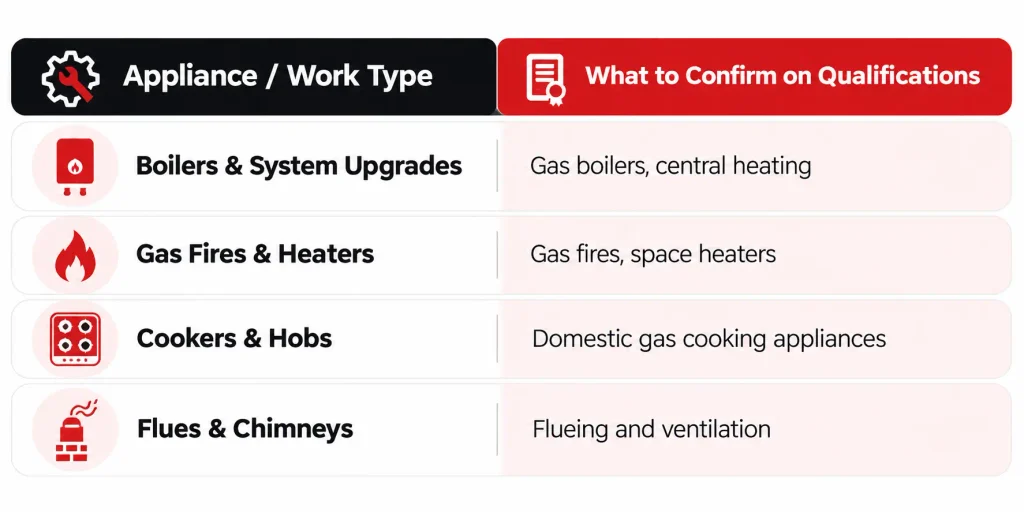
Before agreeing to any work, the homeowner should identify precisely what needs attention: boiler, gas fire, cooker, hob, warm‑air unit, or flue system. Then they should match that list to the engineer’s stated competencies.
If any required category is missing, they should seek another engineer.
Verify the Engineer Before Work Begins
Having confirmed that an engineer holds the right qualifications for the specific appliance, a homeowner must next make sure that the person turning up at the property is genuinely that registered professional. This step protects the freedom to live safely, without hidden risks or dependence on guesswork.
Before any tools come out, the homeowner can ask to see the Gas Safe ID card and hold it long enough to check it properly. The card should display the engineer’s photograph, registration number, and expiry date. The name on the card should match the name previously given during booking and on any written quote.
Crucially, the homeowner should review the list of appliances and work types on the back of the card, confirming that the specific job is covered. If desired, the registration number can be quickly checked on the official Gas Safe Register website or by phone before work begins.
Warning Signs of an Unverified Engineer
Sometimes warning signs appear before a single question is asked about an ID card. An engineer who resists basic scrutiny quietly signals risk to a household’s safety and freedom of choice. Common red flags include refusing to show a Gas Safe ID, presenting an ID that looks damaged or altered, or hurrying past the card so no one can read the details.
An unverified engineer may insist on starting immediately, discouraging any checks on the Gas Safe Register. They might offer unusually low prices, demand large cash payments upfront, or avoid giving a written quote or receipt. Vague business details, no registered address, or a phone number that constantly changes further reduce trust.
Defensive behaviour when asked simple questions about qualifications, insurance, or past work is another warning sign. When these patterns appear, a cautious customer recognises that walking away protects both safety and independence.
What If Registration Cannot Be Confirmed?
When warning signs start to stack up and an engineer’s registration still cannot be confirmed, the safest option is to pause the work before any tools come out. At this point, the homeowner’s priority is protecting their freedom to live safely, without hidden gas risks or legal headaches. No verification means no permission to touch the gas supply.
They can explain calmly that, without confirmed Gas Safe details, the job cannot proceed. This clear boundary keeps control in their hands, not the engineer’s. If the engineer pressures, discounts, or rushes, that only reinforces the decision to walk away.
| Situation | Recommended Response |
| Registration unclear or missing | Stop work and refuse access to appliances |
| Conflicting ID or licence details | End contact and seek another engineer |
| Engineer becomes pushy or evasive | Decline the job and document communications |
Ultimately, stepping back preserves safety, time, and choice.

What to Ask an Engineer Before Hiring
Before any tools or paperwork are discussed, a homeowner’s most effective safeguard is a focused set of questions that test both competence and credibility. They maintain control by asking the engineer to show their Gas Safe ID card and reading the front and back: photo, expiry date, licence number, and which appliances they are qualified to work on.
Next, the homeowner can ask how long the engineer has been registered, whether they work independently or under a company, and request a written quote detailing labour, parts, and any call‑out fees. They should also ask what standards and regulations will guide the work, and whether the engineer will provide a certificate or written record when the job is complete.
Finally, they benefit from asking about insurance, guarantees on workmanship, how emergencies are handled, and whether recent customer references or reviews are available.
Frequently Asked Questions
Can I Check a Gas Safe Engineer’s Complaint or Disciplinary History?
Yes, they can. They may contact Gas Safe Register directly for complaint records, search any published enforcement actions, and check court or Health and Safety Executive reports, while also exploring online reviews and local word‑of‑mouth for patterns.
How Do I Verify an Engineer Recommended Through Online Tradespeople Platforms?
They independently confirm identity, then cross-check the engineer’s Gas Safe number on the official register, inspect uploaded qualifications, insist on written quotes and references, read off‑platform reviews, and avoid paying cash or upfront without traceable documentation.
Are There Differences Between Gas Safe Engineers and Heating/Plumbing General Contractors?
Yes. Gas Safe engineers hold statutory registration for gas work, while heating/plumbing contractors may handle wider systems. The cautious client checks Gas Safe ID, scopes gas tasks specifically, and refuses any unregistered individual touching gas appliances or pipework.
What Records Should I Keep After Hiring a Verified Gas Safe Engineer?
They should keep the Gas Safe certificate, invoices, engineer’s Gas Safe registration number, appliance serials, service/installation reports, test results, warranty documents, and dated photos of work completed, ensuring future flexibility for resale, insurance, maintenance, or disputes.
How Often Should I Re-Verify an Engineer I’ve Used Before?
They should re-verify the engineer every 12 months, before major work, or whenever instincts raise doubt. Checking the Gas Safe Register and ID card keeps their choices independent, informed, and protected from slipping standards or expired qualifications.
Conclusion
By carefully verifying a Gas Safe engineer before hiring, homeowners in the UK can greatly reduce the risk of unsafe or illegal gas work. Checking Gas Safe registration, qualifications, and the ID card, and confirming suitability for specific appliances, provides essential peace of mind. Recognising warning signs and knowing how to verify a Gas Safe engineer guarantees only properly qualified professionals are trusted with gas installations, protecting both property and lives.