
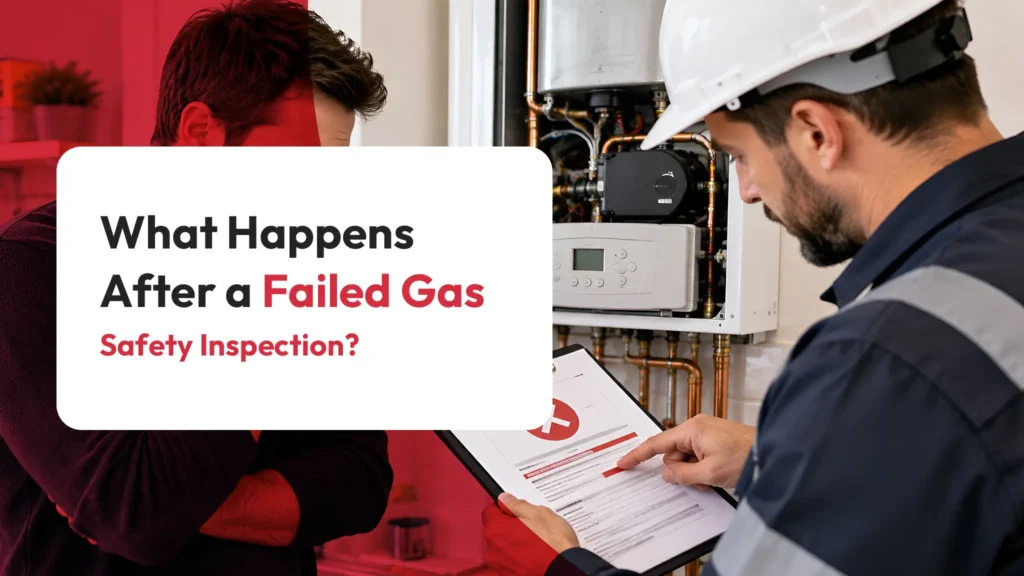
What happens after a failed gas safety inspection in the UK? The Gas Safe engineer records all defects and risk codes on the Gas Safety Record. Any “Immediately Dangerous” or “At Risk” appliances are capped or isolated. The landlord must arrange prompt repairs using a Gas Safe engineer and cannot use unsafe appliances meanwhile. A follow-up check is then carried out, and a new record issued once safe. The next sections explain each step and legal duty in more detail.
Key Takeaways
- The engineer records all defects on the Gas Safety Record, classifying them (e.g., Immediately Dangerous or At Risk) and explaining any restrictions or appliance isolation.
- Unsafe appliances or pipework may be capped, isolated, or switched off immediately to remove danger until repairs are completed.
- The landlord or duty holder must arrange prompt remedial work or replacement to correct all issues causing non-compliance with gas safety regulations.
- After repairs, a Gas Safe engineer must re-inspect, confirm safety, and issue a new Gas Safety Record; the original failure remains on file.
- Landlords typically review the failure, adjust maintenance schedules, and improve monitoring to prevent repeat issues and ensure ongoing legal compliance.
Table of Contents
What Does a Failed Gas Safety Inspection Mean?
A failed gas safety inspection indicates that one or more gas appliances, pipework, or flues in a property do not meet the legal safety standards required in the UK. It signals that the system, as it stands, carries an unacceptable level of risk to life, health, or the wider building structure. The failure is recorded on the Gas Safety Record, highlighting specific items that do not comply.
From a legal standpoint, it means the landlord or property owner is no longer free to ignore the condition of the gas installation. Certain appliances may be labelled “At Risk” or “Immediately Dangerous,” reflecting how severely they threaten safe use. A failed inspection also means that any previous assumption of compliance is no longer valid. For anyone who values autonomy over their home or rental business, the failure acts as a firm boundary: use must now align with enforceable safety law.
What Happens When Defects Are Found?
Discovery of defects during a gas safety inspection triggers a defined sequence of actions, not a vague warning. Once an issue is identified, the engineer records it on the Gas Safety Record using recognised classification codes. Each defect is described clearly so the landlord or owner can see what limits their legal freedom to let or use the property as it stands.
The engineer then explains, in plain terms, what the defect means and what restrictions now apply. They may cap or isolate an appliance or section of pipework if it cannot be used safely, allowing the rest of the system to operate where possible.
Responsibility then shifts to the duty holder—usually the landlord—who decides how quickly to instruct repairs, replacements, or further investigations. Documentation from this stage becomes the evidence trail: it shows what was found, when it was found, and what was done in response, protecting both occupants and property rights.
What Gas Safety Defects Need Immediate Action?
When defects are recorded on the Gas Safety Record, not all carry the same weight; some demand immediate intervention because they present an unacceptable risk of fire, explosion, or carbon monoxide poisoning. These are usually classified by engineers as “Immediately Dangerous” (ID) or “At Risk” (AR), signalling hazards that cannot be ignored without jeopardising safety and legal compliance.
Typical issues include live gas leaks, severely corroded or damaged pipework, appliances with inadequate ventilation, or flues that leak combustion products back into living spaces. Any evidence of carbon monoxide spillage, scorch marks, or melted casings is treated as urgent.
| Defect type | Why it needs immediate action |
| Confirmed gas leak | Direct risk of explosion and fire |
| Blocked or leaking flue | High likelihood of carbon monoxide exposure |
| Severely damaged or corroded pipework | Potential sudden failure and uncontrolled gas escape |
| Appliance classified as ID or AR | Unsafe to operate under current gas safety regulations |
What Repairs May Be Required?
Following a failed gas safety inspection, required repairs typically target the specific faults that led to non-compliance, ranging from minor adjustments to full component or appliance replacement. Common remedial work includes fixing or replacing faulty gas valves, regulators, or thermocouples, and tightening or renewing joints where leaks are detected. Where combustion is poor, repairs may involve cleaning or replacing burners, injectors, or heat exchangers to restore efficient, safe operation.
If ventilation or flueing is inadequate, work can include repairing or relining flues, resealing flue joints, or upgrading terminal positions to guarantee products of combustion discharge safely. Damaged or outdated gas pipework may need partial or full replacement, particularly where corrosion or mechanical damage is found.
In some cases, older or repeatedly failing appliances are best resolved by full replacement, allowing occupants to move forward with safer, more efficient equipment and fewer ongoing restrictions.
Who Can Carry Out the Necessary Repairs?
Only engineers who are on the Gas Safe Register are legally permitted to carry out most repairs identified during a failed gas safety inspection in the UK. This legal requirement protects occupants’ safety while still allowing owners to choose any properly registered engineer, rather than being tied to a single provider or the original inspector.
A landlord or homeowner may verify an engineer’s credentials by checking their Gas Safe ID card and cross‑referencing the licence number on the official online register. They are free to request quotes from several registered engineers, compare approaches, and select the one that best matches their budget and timescale.
Unregistered individuals must not repair or alter gas appliances, meters, or pipework. Doing so is a criminal offence and can invalidate insurance or warranties. Routine non‑gas tasks around the appliance, such as decorating or basic carpentry, may be carried out by others, provided they do not interfere with the gas installation itself.
When Is a Follow-Up Gas Safety Check Needed?
After a failed gas safety inspection, a follow‑up check is generally required once all identified unsafe or at‑risk issues have been rectified by a Gas Safe registered engineer. This follow‑up is not optional; it confirms that hazardous conditions have been removed and that the installation now meets the legal standard. Without it, the previous fail status effectively still stands.
A follow‑up check is typically needed where appliances or pipework were classified as “Immediately Dangerous” (ID) or “At Risk” (AR), or where significant remedial work has altered the gas installation. It may also be necessary when access problems or missing documentation prevented the original inspection from being fully completed.
Landlords in particular need a follow‑up promptly, as they remain responsible for providing a valid, up‑to‑date Gas Safety Record. The new record, issued after the follow‑up, replaces the failed certificate and restores clear, documented compliance.
When Can the Appliance Be Used Again?
Gas appliances can generally be used again once a Gas Safe registered engineer has completed all required remedial work and confirmed the system is safe, ideally in writing. Until that point, the freedom to use the appliance is restricted by law and by common‑sense safety. If the engineer has attached “Immediately Dangerous” (ID) or “At Risk” (AR) labels, those warnings must be taken seriously and the appliance must not be operated.
The appliance may be restored to use immediately after the successful repair and safety checks, provided there are no remaining defects. Where parts need ordering, occupants remain unable to use the appliance until fitting and re‑testing are finished. If multiple appliances are affected, each is cleared individually; one unsafe appliance does not automatically prohibit use of others that have passed. Ultimately, the engineer’s explicit confirmation of safety is the point at which normal, unrestricted use resumes.
What Happens to the Gas Safety Record?
Once an engineer has confirmed an appliance is safe to use again, attention turns to how this outcome is recorded on the Gas Safety Record. The failed inspection is never erased; instead, the record is updated to show the defect, the action taken, and the date the appliance became safe. This transparent paper trail protects occupants and gives landlords evidence they acted responsibly and promptly.
The Gas Safety Record will clearly distinguish between the original failure and the remedial visit. This matters for anyone who wants the freedom to live or let property without hidden hazards or bureaucratic confusion. Typically, the updated record will note:
- Which appliance failed and why
- Classification of the fault (e.g., Immediately Dangerous, At Risk)
- Work carried out to remove that risk
- New test results confirming safe operation
- The engineer’s name, company, Gas Safe number, and the date of reinstatement

How to Prevent Future Gas Safety Problems
Preventing repeat gas safety failures depends less on last‑minute repairs and more on steady, planned maintenance. Landlords who want maximum freedom to let properties without disruption usually adopt a calendar of routine checks, rather than waiting for annual inspections to reveal problems. This means documenting appliance ages, known quirks, and past advisories, then scheduling remedial work before issues harden into violations.
They typically use only Gas Safe registered engineers and keep contact details ready, so access and repairs are arranged quickly, with minimal tenant inconvenience. Clear communication with occupants matters: explaining how to spot warning signs—smells, soot, pilot‑light changes, headaches—helps catch faults early.
Many also standardise high‑quality appliances and parts across their portfolio, reducing variability and unexpected failures. After any failed inspection, they review the engineer’s notes, update risk assessments, and adjust maintenance intervals. This structured approach preserves legal compliance while keeping day‑to‑day control firmly in their hands.
Frequently Asked Questions
Can My Landlord Evict Me for a Failed Gas Safety Inspection Outcome?
No, a landlord generally cannot evict solely because of a failed gas safety inspection; instead, they must remedy hazards. Eviction attempts linked to exercising safety rights could be challenged as retaliatory or unlawful, preserving the tenant’s autonomy.
Does a Failed Gas Safety Inspection Affect My Home Insurance Coverage?
A failed gas safety inspection can affect cover if policy conditions or disclosure duties are breached. Insurers may reduce, refuse, or void claims linked to known faults. Individuals should review policy wording and insist landlords remedy defects promptly.
Who Pays for Alternative Heating if Appliances Are Shut off After Failure?
Typically, the property owner funds alternative heating, as landlords remain responsible for safe, functional systems. Insurers or local councils sometimes assist, but tenants generally reclaim costs only if contracts, negligence findings, or statutory duties clearly support reimbursement.
Can I Claim Compensation for Health Issues Linked to Gas Safety Failures?
Yes, they potentially can. A person may claim compensation if medical evidence, inspection reports, and expert opinions link health problems to proven gas safety failures, usually through negligence or housing law claims within strict time limits.
How Does a Failed Inspection Impact Selling or Remortgaging My Property?
A failed inspection usually stalls selling or remortgaging, as lenders and buyers demand a clear gas safety record. The owner typically must repair issues, secure a pass certificate, then renegotiate timelines, prices, or lending terms from a stronger position.
Conclusion
In conclusion, a failed gas safety inspection signals issues that must be addressed promptly to protect occupants and property. By understanding defect categories, arranging qualified repairs, and following guidance on appliance use and follow‑up checks, landlords and homeowners can restore compliance and safety. Maintaining accurate gas safety records and adopting regular maintenance and prevention strategies reduces the risk of future failures, ensuring ongoing legal compliance, peace of mind, and a safer living environment for everyone involved.