
What is the Gas Safe Register? The Gas Safe Register is the UK’s official list of engineers legally allowed to work on gas appliances, helping protect homes and businesses from unsafe gas work. It confirms engineers are properly qualified and monitored. To find someone, users can search the Gas Safe Register website or call its helpline, then cross-check with reviews and local recommendations. Always verify the engineer’s Gas Safe ID card and online record, and the next sections explain how to do this confidently.
Key Takeaways
- The Gas Safe Register is the UK’s official list of businesses legally allowed to work on gas appliances in homes and commercial properties.
- Registration ensures engineers are properly qualified and regularly assessed, helping prevent gas leaks, explosions, and carbon monoxide poisoning.
- You can find local Gas Safe engineers using the official online search tool or by calling the Gas Safe Register helpline.
- Always check an engineer’s Gas Safe ID card and match their licence number and work categories with the details on the official Register.
- If an engineer refuses to show their ID card or can’t be found on the Register, do not use them and choose a verified business instead.
Table of Contents
What Is the Gas Safe Register?
The Gas Safe Register is the official list of engineers in the UK who are legally permitted to work on gas appliances and installations. It is a nationwide register created to identify exactly who is authorised to work on boilers, fires, cookers, and other gas systems in homes and businesses.
Its core purpose is clarity: to separate legitimately qualified engineers from anyone operating without proper competence or authorisation. By existing as a single, central record, it lets individuals choose who works in their property with confidence and control.
The register is managed on behalf of the government and applies across England, Scotland, Wales, Isle of Man, and Guernsey. Only engineers who meet required training and assessment standards can join and remain listed. For people who value autonomy in managing their own property, the Gas Safe Register functions as a transparent tool for checking credentials before agreeing to any gas work.
Why Gas Safe Registration Matters
Relaxation around gas work depends on more than convenience or cost; it rests on safety backed by law. Gas appliances burn a powerful fuel; when handled badly they can leak, explode, or silently release carbon monoxide. Gas Safe registration exists to keep that risk under firm control, protecting people’s freedom to live, work, and move without hidden danger in their own buildings.
Legally, anyone paid to work on gas appliances in the UK must be on the Gas Safe Register. This legal duty creates accountability: registered engineers are identifiable, monitored, and subject to sanction if they ignore standards. That framework helps prevent corner‑cutting and untraceable “cash‑in‑hand” jobs that expose households to serious harm.
For landlords and businesses, using Gas Safe engineers is not optional; it is a statutory requirement. Compliance safeguards occupants, avoids prosecution, and demonstrates responsible stewardship of property and lives.
Who Can Join the Gas Safe Register?
Given the legal weight behind Gas Safe registration, attention naturally turns to who is actually allowed to hold that status. The register is open to businesses, not individuals acting entirely alone; however, a sole trader can register as a one‑person business. To qualify, the business must employ engineers who hold recognised gas qualifications, usually achieved through ACS, NVQ, or an equivalent route approved by the registration body.
Eligibility is tied to proven competence, not simply experience or desire to work independently. Applicants must evidence up‑to‑date training, assessment in specific categories of gas work (such as boilers, cookers, or LPG), and appropriate insurance. Ongoing freedom to operate in the gas sector depends on regular reassessment and compliance with current regulations. If standards slip, registration can be limited or withdrawn, reinforcing that Gas Safe status is a permission earned through skill and maintained through continuous professional responsibility.
How to Find a Gas Safe Engineer
Locating a genuine Gas Safe engineer starts with checking official records rather than relying on word of mouth alone. An individual who values independence will usually begin with the Gas Safe Register’s own search tools, accessible online or by phone, to see who operates in their area. This lets them choose from a nationwide pool rather than being limited to whoever a neighbour happens to know.
They may then narrow the list by matching engineers to the specific type of work needed, such as boilers, fires, or cookers. This targeted approach allows a homeowner or landlord to stay in control of both safety and cost, comparing options without pressure.
Some people combine the official search with online reviews, local community boards, or social media recommendations. Used carefully, these channels can highlight engineers who not only meet legal standards but also respect clients’ time, property, and need for straightforward arrangements.
How to Verify an Engineer’s Registration
Before any work begins, how can a homeowner be sure an engineer’s Gas Safe status is still valid rather than relying on an out-of-date claim? The most direct route is the official Gas Safe Register website or phone line. By entering the engineer’s licence number, surname, or business name, anyone can see whether the registration is active or expired, plus the dates it is valid between.
A Gas Safe ID card should then be checked in person. The card’s front shows the engineer’s photo, licence number, and expiry date; if the date has passed, the registration is no longer valid, regardless of what is said. The details on the card should match the online record exactly.
If an engineer refuses to show their card, or their details cannot be verified on the Register, a homeowner is free to walk away and hire someone fully compliant.
Checking Gas Work Qualifications
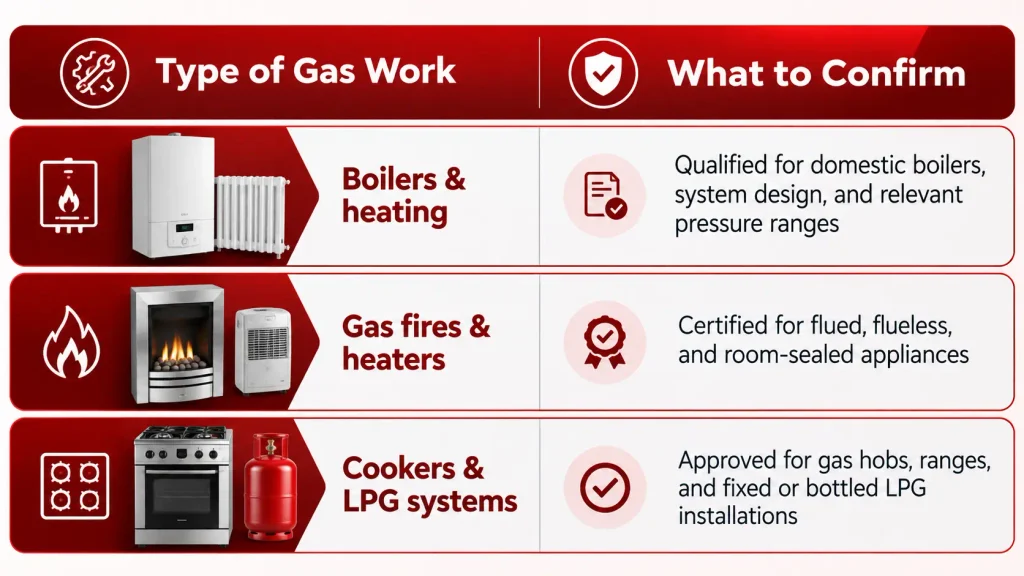
Homeowners should confirm not only that an engineer is Gas Safe registered, but also that they hold the correct qualifications for the specific job required, such as working on boilers, gas fires, cookers, or LPG systems. Each category of appliance and fuel type demands specific training and ongoing assessment, so assuming a “general” gas ticket covers everything can quietly limit a homeowner’s safety and freedom of choice.
A careful check verifies the engineer is authorised for the exact work planned, whether installing a high‑efficiency boiler, converting to LPG, or decommissioning an old gas fire. This lets residents upgrade, adapt, or redesign their homes without hidden risk.
Understanding the Gas Safe ID Card
Confirming qualifications on paper is only part of the safeguard; the Gas Safe ID card provides on-the-spot proof of exactly what an engineer is allowed to work on. The card gives householders immediate control: they can decide, at the door, whether to accept or refuse the work. It shows the engineer’s photograph, licence number, and the expiry date, so the person hiring can see if the registration is current.
Crucially, the reverse of the card lists the categories of gas work the engineer is competent and approved to carry out, such as boilers, gas fires, or LPG installations. If a specific appliance type or fuel category is not listed, the engineer is not authorised for that task. By simply reading the card, anyone can match the work needed with the skills proved, keeping the choice firmly in their own hands and avoiding guesswork or blind trust.
What If an Engineer Is Not Registered?
Although an unregistered person may offer cheaper rates or quick availability, allowing them to work on gas appliances exposes occupants to serious danger and legal complications. Without the checks that accompany Gas Safe registration, no one independently verifies their training, recent experience, or ability to work to current safety standards. For people who value autonomy, this lack of oversight quietly removes their freedom to live, rent, or sell property without hidden risk.
The implications can be severe:
- Physical danger – Faulty installations increase the chance of gas leaks, fires, explosions, and carbon monoxide poisoning, threatening anyone in or near the property.
- Legal and financial exposure – Insurance may be invalidated, property transactions delayed, and the property owner—not the rogue trader—can be held liable.
- Loss of long‑term choice – Unsafe work may require costly corrective repairs, limiting how the owner can use, let, or modify the property in future.
Which Gas Work Requires Registration?
Understanding which tasks legally require a Gas Safe registered engineer prevents both accidental law‑breaking and unsafe DIY. In the UK, any work that interferes with a gas supply or combustion process in a property used as a dwelling, workplace, or rental must be done by someone on the Gas Safe Register. This applies regardless of whether payment changes hands.
Registration is required for installing, relocating, or disconnecting gas boilers, cookers, hobs, and fires, as well as flues and chimney liners serving gas appliances. It also covers work on gas pipework after the meter, including extensions, alterations, and leak repairs. Commissioning new appliances, changing gas rates, or adjusting burner pressure must be carried out by registered engineers.
Servicing and safety checks, such as combustion analysis, ventilation assessment, and flue integrity testing, are equally regulated. Even seemingly simple tasks, like moving a gas cooker point, fall within registered gas work.
How to Choose the Right Gas Engineer
Selecting the right Gas Safe registered engineer involves more than simply finding someone available at short notice. A careful choice gives a household the freedom to use gas safely, without anxiety or hidden risks. Beyond checking the Gas Safe ID card, a few targeted criteria help distinguish a reliable professional from a convenient but unsuitable option.
- Specialist competence – An engineer’s qualifications must match the appliance and fuel type: boiler, fire, cooker, LPG, or commercial systems. Their Gas Safe card and online record show these categories clearly.
- Transparent communication and pricing – Clear explanations, written quotes, and agreed timeframes allow a customer to stay in control, avoiding open‑ended costs or confusing technical jargon.
- Proven track record – Independent reviews, references, and evidence of past work demonstrate consistency. Membership of recognised trade bodies and appropriate insurance reinforces trust and long‑term peace of mind.
Frequently Asked Questions
How Much Does It Cost to Use a Gas Safe Registered Engineer?
It typically costs £50–£120 per hour to use a Gas Safe registered engineer, with fixed-job quotes often £80–£300. Prices vary by region, job complexity, emergency callouts, and the individual’s freedom to negotiate terms.
How Often Should Gas Appliances Be Serviced by a Registered Engineer?
Gas appliances should generally be serviced once every 12 months by a registered engineer. Regular checks keep systems efficient, protect occupants’ safety, and help guarantee people can enjoy their homes and choices without unexpected breakdowns or gas hazards.
Can Tenants Insist Their Landlord Uses a Gas Safe Registered Engineer?
Yes, tenants can insist, because landlords are legally required to use Gas Safe registered engineers. Tenants may refuse unsafe access, request proof of registration, raise concerns with the landlord, then escalate to the local authority or Health and Safety Executive.
Are Gas Safe Engineers Required to Have Specific Insurance Coverage?
Yes. Gas Safe engineers must carry valid public liability insurance; many clients also expect professional indemnity cover. Insurance levels vary, but proof of active policies safeguards householders’ rights, property, and freedom to challenge negligent or unsafe gas work.
What Should I Do if I Suspect Unsafe Gas Work Was Carried Out?
They should shut off the appliance or supply, ventilate the area, avoid switches or flames, evacuate if necessary, then report it to the Gas Safe Register and, if gas is leaking, call the emergency gas number immediately.
Conclusion
Understanding, “What is the Gas Safe Register” helps homeowners and landlords protect their properties and occupants. By insisting on a properly registered engineer, checking their ID card, and verifying their status online, they can be confident that gas work is carried out safely and legally. Knowing which jobs require registration, the risks of using unregistered workers, and how to choose the right engineer enables informed, responsible decisions that reduce danger and guarantee ongoing compliance.