
Gas safety in UK student accommodation requires landlords and managing agents to maintain all gas appliances, pipework and flues using Gas Safe registered engineers. Annual gas safety for student accommodation checks are mandatory wherever gas is present, with written Gas Safety Records supplied to tenants. Inspections test appliances, ventilation, flues and safety devices, and serious defects can lead to disconnection or enforcement action. Students have rights to safe housing and proof of compliance, with further sections explaining these duties in practical detail.
Key Takeaways
- Landlords and managing agents must ensure all gas appliances, fittings, and flues are installed, serviced, and repaired by Gas Safe registered engineers.
- An annual gas safety check is required for any student property with gas appliances, pipework, or flues, including HMOs and university-managed halls.
- Landlords must provide tenants with a current Gas Safety Record within the legal timeframe and keep written records of inspections and remedial actions.
- Unsafe findings, such as gas leaks or “Immediately Dangerous” appliances, require immediate action, possible disconnection, and restrictions on occupancy until made safe.
- Students have the right to see gas safety evidence, report smells or carbon monoxide symptoms promptly, and refuse to live in demonstrably unsafe accommodation.
Table of Contents
Gas Safety Responsibilities in Student Accommodation
In London’s student accommodation sector, gas safety responsibilities are clearly defined by UK law and primarily rest with the landlord or managing agent. They must guarantee all gas appliances, fittings, and flues they provide are safe, properly installed, and maintained by a Gas Safe registered engineer. This duty applies whether students rent a room, a flat, or a shared house.
Landlords must arrange regular gas safety inspections and keep written evidence of compliance. They are required to provide each tenant with an up‑to‑date gas safety record within the legally specified timeframe and whenever new tenants move in. Managing agents acting on the landlord’s behalf share these duties where contracts assign them responsibility.
Students retain the freedom to use heating and cooking appliances but must not modify gas equipment or block vents. They should promptly report gas smells, faulty appliances, or symptoms of carbon monoxide exposure to the landlord or agent.
Which Student Properties Require Gas Checks?
Whether purpose‑built halls or shared houses, any student property that contains a gas appliance, pipework, or flue requires regular gas safety checks under Gas Safety (Installation and Use) Regulations 1998. This applies regardless of how informal the living arrangement feels or how briefly students stay there. If gas is present, checks are mandatory.
Privately rented student houses, HMOs, lodger rooms within a landlord’s home, converted flats, and mixed‑use buildings with student units above shops all fall within scope where gas is installed. University‑owned or managed halls are equally bound by the same legal duties when gas supplies exist on the premises.
Even when students never directly use a gas system, for example, where a basement boiler serves all flats, the property still requires annual checks and a valid Gas Safety Record. Only fully electric properties, with no gas connection or flues, stand outside these requirements, giving students more flexibility without sacrificing safety.
Gas Appliances Used in Student Housing
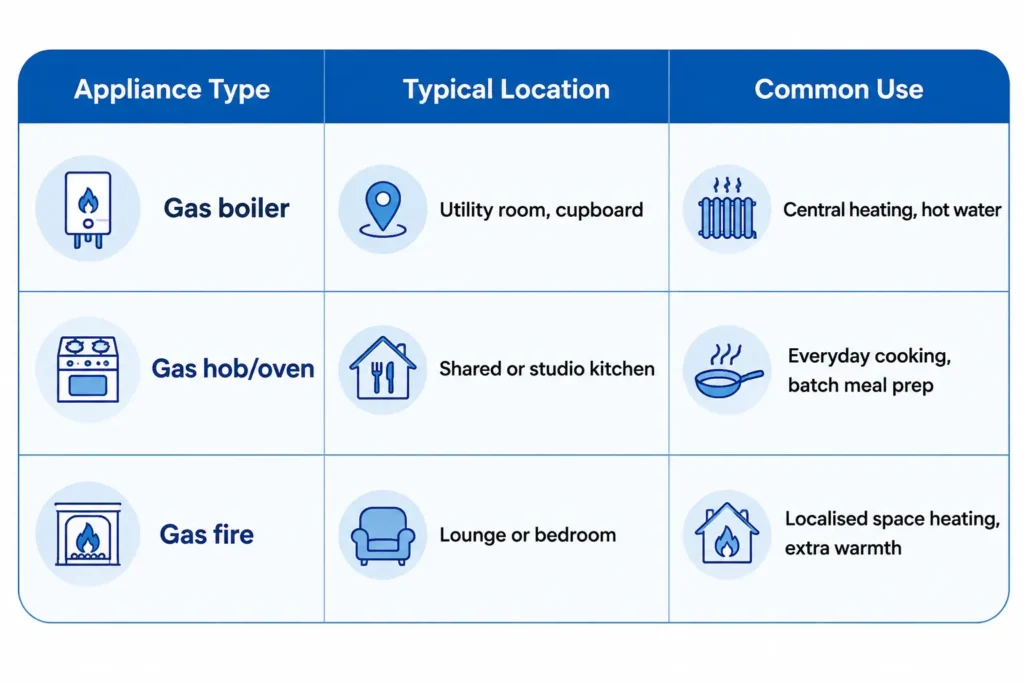
Although student accommodation can vary widely in layout and age, the gas appliances found inside are often similar across most properties. Most homes rely on a gas boiler for heating and hot water, sometimes supported by gas fires or wall heaters in older buildings. In shared kitchens, gas hobs and ovens remain popular because they are responsive and familiar to many students leaving home for the first time.
These appliances give residents flexibility in how they live, cook, and manage comfort levels, but they also introduce specific responsibilities for landlords and expectations of basic awareness from occupants.
What Does the Gas Safety Inspection Cover?
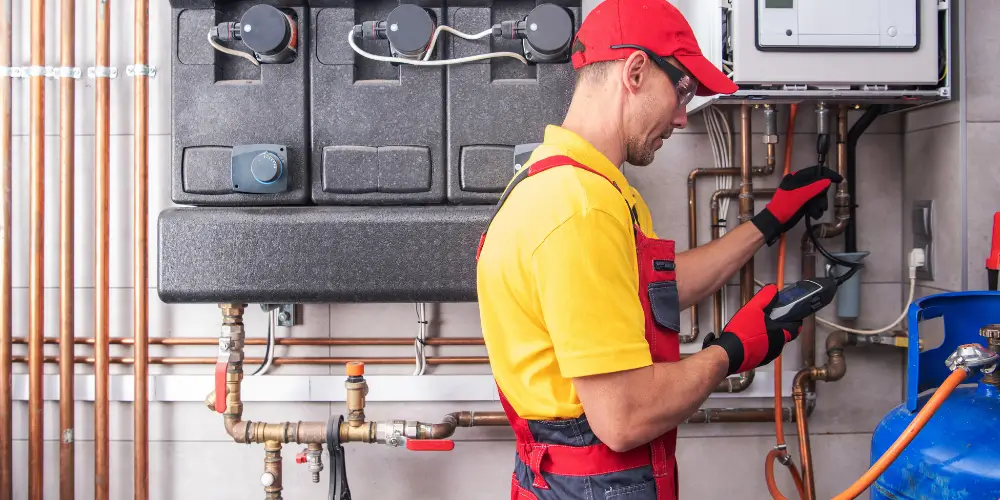
A gas safety inspection focuses on confirming that every gas appliance and its associated pipework in the property can operate without presenting a risk to occupants. During the visit, an engineer checks boilers, gas hobs, ovens, and any fixed gas heaters to guarantee they are installed correctly and working within safe limits.
The engineer verifies that safety devices, such as flame supervision components, function properly so gas flow stops if a flame goes out. Appliance controls and thermostats are tested to confirm that systems heat efficiently without overheating or wasting fuel.
They also measure gas operating pressures and test for leaks within the appliance casings and accessible connections, assuring gas flows only where and when it should. Finally, they confirm that visible labels, user instructions, and emergency shut-off points are clear, so students can confidently use and, if needed, quickly isolate each appliance. Explore How to Prepare for a Gas Safety Inspection: Checklist for London Landlords
Checking Gas Pipework, Flues and Ventilation
Every gas safety inspection in student accommodation must extend beyond appliances to include a thorough check of the pipework, flues, and ventilation. Freedom to live, study, and socialise without concern for hidden gas risks depends on these often-overlooked elements working safely together. Inspectors look for leaks, corrosion, and poor routing in pipework, because even minor damage can allow gas to escape into living spaces.
Flues are checked to confirm they are continuous, correctly terminated, and not blocked or bridged by DIY alterations, furniture, or stored items. Any sign of staining, soot, or condensation around a flue is treated as a warning indicator.
Ventilation is examined to guarantee rooms receive enough fresh air for complete combustion and safe dispersal of fumes, without relying on occupants leaving windows permanently open.
| Area checked | Key risk controlled | Typical actions taken |
| Pipework | Gas leaks | Tightness testing, visual check |
| Joints | Weak connection points | Re-sealing, replacement |
| Flues | Fume build-up indoors | Blockage removal, repair |
Gas Safety in Shared Kitchens and Communal Areas
Because shared facilities introduce extra risks, gas safety in student kitchens and communal areas depends on clear responsibilities and consistent controls rather than informal habits. Landlords remain legally responsible for gas appliances, but students’ everyday choices decide how safe those spaces actually are. Shared cookers, hobs and gas heaters must be installed and maintained by Gas Safe registered engineers, with visible evidence of servicing close by or in digital handbooks.
Communal areas should have clear written rules: no tampering with gas appliances, no blocking vents, and no DIY fixes. Simple, non‑intrusive signage can remind residents to keep combustible materials away from hobs, report gas smells immediately, and avoid leaving cooking unattended. Carbon monoxide detectors in or near shared kitchens and lounges are essential, tested regularly and never disabled. Transparent communication about risks, controls and reporting routes supports students’ autonomy while keeping shared freedoms within safe limits.
Arranging Access Around Student Tenants
Shared spaces only stay safe if landlords can inspect and service gas appliances on schedule, which makes arranging access around student tenants a practical challenge as well as a legal duty. Students value autonomy and irregular routines, so rigid appointment times often fail. Responsible landlords consequently plan ahead, giving clear written notice and offering flexible time windows, including evenings where possible.
They typically coordinate via email, messaging apps, or online portals so tenants can confirm or rearrange visits without friction. Group messages to all occupants, backed by individual reminders, help guarantee someone is present while still respecting privacy.
Where access proves difficult, landlords may agree key‑holding arrangements, but only with explicit consent, limited use, and transparent records of entry. Emphasising that inspections protect everyone’s freedom to live, study, and socialise without avoidable risk helps secure cooperation and reduces last‑minute cancellations or refusals of entry.
Common Gas Safety Problems in Student Properties
Many student properties develop a predictable set of gas‑related issues that stem from heavy use, tight budgets, and high tenant turnover. These homes are often pushed hard: heating on full, constant cooking, and frequent rearranging of furniture or room use, all of which can expose weak points in gas systems.
Common patterns include:
- Poorly maintained appliances – Boilers, cookers, and fires may be old, inadequately serviced, or fitted with worn seals and corroded components.
- Blocked or inadequate ventilation – Intakes and flues can be covered by belongings, washing, or makeshift DIY, limiting combustion air and safe fume dispersal.
- Tampered or damaged detectors – Carbon monoxide alarms may be removed, silenced, or allowed to expire, stripping away an essential early‑warning layer.
- DIY modifications – Unauthorised changes to rooms, furniture, or gas appliances themselves may strain pipework, obstruct flues, or break required clearances around equipment.
What Happens If Property Fails a Gas Safety Check?
When a student property fails a gas safety check, the outcome is not simply a failed inspection but a trigger for immediate risk management and legal obligations. The engineer records defects on the Gas Safety Record, often grading them as “At Risk” (AR) or “Immediately Dangerous” (ID). For ID issues, the engineer will disconnect or cap the supply to that appliance or, in severe cases, the whole system.
Landlords must act quickly: arranging repairs by a Gas Safe registered engineer, replacing condemned appliances, and commissioning a follow‑up safety check. Until the property passes, it should not be occupied, or at minimum the unsafe appliances must not be used.
If landlords ignore the result, they risk enforcement by the local authority or HSE, including improvement notices, prohibition notices, fines, and potential prosecution. Students retain the right to demand evidence of compliance and to refuse unsafe accommodation.
Frequently Asked Questions
Can Students Request to See the Property’s Current Gas Safety Record Certificate?
Yes. Students are legally entitled to request and receive a copy of the current gas safety record. The landlord must provide it free, promptly, and display it clearly, empowering students to assess and challenge unsafe conditions.
What Training Should Student Tenants Have for Using Gas Appliances Safely?
Student tenants should receive clear, minimal training: recognizing gas smells, operating appliances and ventilation correctly, lighting boilers and hobs safely, locating emergency shut-off valves, using carbon monoxide alarms, and knowing when and how to report faults or evacuate.
How Often Should Carbon Monoxide Alarms Be Tested in Student Accommodation?
Carbon monoxide alarms should be tested at least monthly, with landlords checking at the start of each tenancy. Independent students often press the test button weekly, replace batteries when needed, and report any fault or persistent beeping immediately.
Are Portable Gas Heaters Allowed in Student Rooms or Shared Areas?
Portable gas heaters are generally banned in student rooms and shared areas, as they raise fire, explosion and carbon monoxide risks. Accommodation contracts, university policies and landlords’ house rules usually prohibit them, regardless of students’ personal preference.
Who Pays for Emergency Gas Leak Callouts in Student Rental Properties?
Typically the landlord pays for emergency gas leak callouts, as they’re responsible for infrastructure safety; however, tenants might pay if they caused damage through misuse. Tenants should check contracts and insist urgent visits never be delayed over cost.
Conclusion
Gas safety for student accommodation is a legal and moral priority for landlords and agents. By ensuring annual gas safety checks, maintaining appliances, and providing safe communal areas, they reduce risks of leaks, carbon monoxide poisoning and fire. Effective communication with student tenants and careful access arrangements are also essential. When issues arise, prompt remedial action and re-inspection protect occupants and keep properties compliant, creating a safer, more reliable living environment for students across London.