
Owners must guarantee hotel gas safety compliance. They should ensure that gas appliances, pipework, and flues are safely installed, regularly serviced, and annually checked by Gas Safe registered engineers. They need a written gas safety policy, clear incident procedures, and robust digital records of inspections, defects, and remedial work. Proper ventilation, CO alarms, safe plant rooms, and controlled access to guest areas are essential. Knowing how to select engineers, manage incidents, and maintain ongoing compliance will greatly strengthen hotel safety and protection.
Key Takeaways
- Ensure all gas appliances, pipework, and flues are installed, serviced, and annually checked by appropriately qualified Gas Safe registered engineers.
- Maintain a written gas safety policy, with clear procedures for inspections, defect reporting, and incident response across the hotel.
- Keep comprehensive digital records of gas safety checks, defects, remedial actions, and engineer credentials for audits and legal compliance.
- Protect guests by ensuring safe appliances in rooms and kitchens, adequate ventilation, and carbon monoxide alarms where appropriate.
- Implement ongoing compliance: regular staff training, routine visual checks, quarterly reviews, and clearly marked isolation valves for rapid emergency shut-off.
Table of Contents
Gas Safety Duties for Hotel Owners
Although the specific legal requirements vary by jurisdiction, hotel owners generally have a clear duty to guarantee that all gas appliances, pipework, and flues on their premises are installed, maintained, and inspected by appropriately qualified professionals. In the UK, this duty is framed as a legal obligation but also as a practical safeguard of guests’ autonomy, wellbeing, and uninterrupted use of the premises.
A responsible owner guarantees that formal gas safety management sits alongside everyday operational freedom. That means implementing a written gas safety policy, appointing competent contractors, and verifying their Gas Safe registration. It also means keeping records of inspections, promptly addressing identified defects, and coordinating access to occupied rooms with minimal intrusion on guests’ privacy.
Management must train staff to recognise warning signs of gas faults and to escalate concerns rapidly, enabling swift action that protects life, health, and the hotel’s ability to trade without restrictive enforcement.
Gas Appliances Covered in Hotels
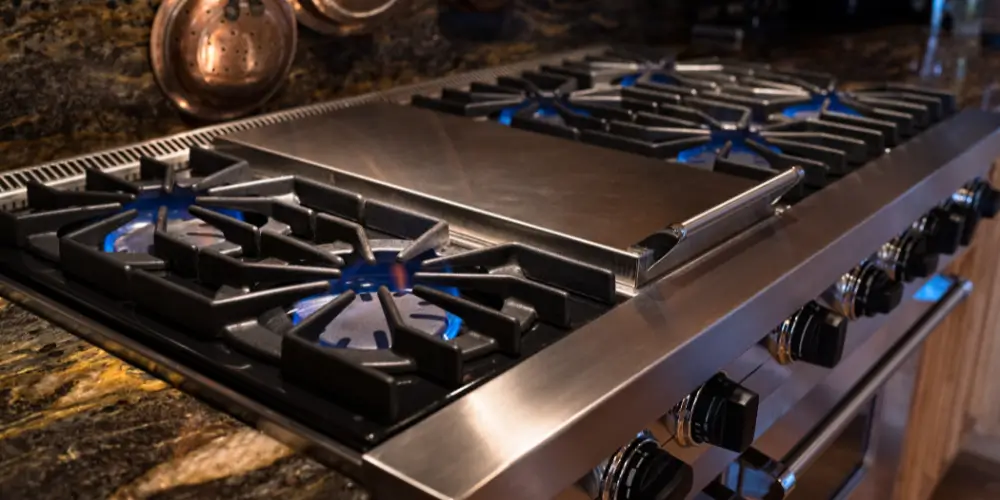
A wide range of gas appliances can be found in hotels, each carrying specific safety implications and compliance requirements. Typical examples include gas boilers for space heating and hot water, direct-fired water heaters, and warm air heaters serving communal and back-of-house areas. In kitchens, gas ranges, ovens, grills, fryers, and combi ovens are common, often supported by gas-fired salamanders and bain-maries.
Many hotels also operate gas-fired laundry equipment, patio heaters, decorative fires in lobbies or bars, and in-room gas fires or stoves in premium suites. Poolside facilities may use gas-fired boilers or heaters for swimming pools, spas, and steam rooms.
All of these appliances fall within gas safety legislation when supplied by natural gas or LPG through fixed pipework. Portable or temporary gas equipment used for events, catering, or outdoor functions also comes under the same compliance framework when used on hotel premises.
Annual Gas Safety Checks for Hotels
In most jurisdictions, annual gas safety checks are a mandatory requirement for hotels, forming the backbone of legal compliance and risk management for gas installations. For UK hotel owners, these checks create the baseline that allows the business to operate confidently, without the constant anxiety of hidden gas risks undermining daily operations.
An annual check typically verifies that every covered appliance is burning gas safely, flues are drawing correctly, and ventilation is adequate. Pipework is inspected for tightness, signs of corrosion, and potential leaks, while emergency isolation valves and safety devices are tested for reliable operation.
Record‑keeping is central. Hotels must retain written evidence of each annual check, including identified defects and remedial actions, and guarantee reports are easily accessible for inspectors, insurers, and internal audits. By treating the annual check as a recurring protective routine rather than a bureaucratic hurdle, hotel owners preserve both guest safety and operational freedom. You can check here in our blog post guide that why the annual gas checks are important for every property: Why Annual Gas Safety Checks Are Essential for Landlords and Homeowners?
Choosing a Gas Safe Registered Engineer
Annual gas safety checks only protect a hotel if they are carried out by a competent, legally recognised professional, which in the UK means a Gas Safe registered engineer. A freedom‑minded hotel owner treats this as non‑negotiable: using unregistered tradespeople risks prosecution, invalidated insurance, and guests’ lives.
The starting point is the official Gas Safe Register website, where an owner can search by postcode and verify an engineer’s licence number and photo ID. They should confirm that the engineer is qualified for the specific fuel type and appliance category used on site, as not all engineers cover all work.
To stay in control, owners typically request evidence of public liability insurance, references from similar hospitality premises, and clarity on reports, response times, and emergency call‑out terms. Written quotes and service agreements help prevent disputes and keep compliance predictable, allowing the hotel to operate confidently and without unnecessary regulatory friction.
Gas Pipework and Connection Checks
Because gas escapes can escalate from minor faults to life‑threatening incidents in minutes, systematic checks of pipework and connections are central to a hotel’s safety.
Routine visual inspection by an engineer should verify that pipe routes are accessible, properly supported, and protected from impact or heat damage. Joints, valves, and flexible hoses must be assessed for wear, kinks, and mechanical strain, with manufacturers’ replacement intervals respected rather than stretched.
Tightness testing using calibrated equipment confirms that the entire installation is gas‑sound at operating and test pressures. Any pressure drop demands immediate investigation and rectification. Clear records of findings, remedial work, and retest results allow hotel owners to demonstrate control, satisfy insurers, and keep their premises legally and operationally secure.
Flue and Ventilation Safety
Effective flue and ventilation design prevents combustion gases from accumulating in occupied areas, turning fuel-burning appliances from a hidden threat into a controlled asset. For hotel owners who value flexibility of operation, safe ventilation is what keeps doors open without compromising guests’ right to breathe clean air.
Flues must be correctly sized, routed, and terminated to guarantee reliable draught and full removal of combustion products. Hidden voids, ceiling spaces, and service shafts demand particular care; poorly sealed joints or damaged liners can leak carbon monoxide into circulation areas and plant rooms. Regular inspection by Gas Safe registered engineers, including flue-gas analysis and visual checks of terminals, is essential.
Ventilation openings, grilles, and ducts must remain unobstructed, correctly rated, and protected from tampering or casual blockage. Clear documentation, labelled access panels, and up-to-date schematics help staff maintain safe airflow while adapting the building for changing guest demands.
Gas Safety in Hotel Kitchens And Guest Rooms
While safe flues and ventilation protect the building as a whole, the most immediate gas risks often arise where appliances are used intensively: hotel kitchens and guest rooms. In commercial kitchens, multiple burners, ovens, and grills may run for long periods, often under time pressure. Owners who want staff to work freely and confidently must guarantee all catering appliances are correctly installed, regularly serviced by Gas Safe registered engineers, and used only with adequate make‑up air and extraction. Flame‑failure devices, interlocked ventilation, and clear shut‑off procedures are essential.
In guest rooms, the priority is silent, reliable protection that does not restrict guests’ sense of comfort or privacy. Any gas fires, hob units, or room‑sealed water heaters must be correctly sized, properly flued, and maintained to manufacturer instructions. Carbon monoxide alarms, annual safety checks, and unimpeded air vents give guests genuine freedom to relax without hidden gas risks.
Gas Safety in Plant and Boiler Rooms
Plant and boiler rooms concentrate much of a hotel’s gas load into compact, often hidden spaces where failures can escalate quickly. For owners who value operational freedom, these rooms are the control centre: when they are safe, the whole building runs reliably and with minimal interference in daily business.
A compliant plant room starts with correct appliance sizing, adequate ventilation, and compliant flues that clear combustion products effectively. Gas pipework must be routed to avoid mechanical damage, corrosion, and unauthorised alterations, with isolation valves clearly accessible so staff can act fast without specialist help.
Automatic gas shut‑off linked to detection and interlocks with ventilation and boiler controls provides an additional layer of protection. Clear access routes, non‑combustible construction, and strict housekeeping, no storage of luggage, chemicals, or general clutter, reduce fire and explosion risks, keeping emergency services and regulators out of the owner’s way. Here is the commercial gas safety guidance : Commercial Gas Safety Inspections Explained /A Complete Guide for London Businesses.
Gas Safety Records and Documentation
Robust gas safety records and documentation form the evidence base that a hotel is managing its gas systems competently and legally. They also protect the owner’s freedom to operate without disruption by demonstrating clear compliance to insurers, guests, and regulators. Accurate documentation shows that gas risks are understood, controlled, and reviewed.
Hotel owners typically maintain a structured record set covering appliances, pipework, flues, and emergency controls, with every intervention logged by a Gas Safe registered engineer. Digital systems are increasingly used to avoid missing certificates, illegible notes, or lost paperwork, while still allowing quick retrieval during audits or claims.
| Record Type | Minimum Detail Required | Typical Retention (UK) |
| Gas Safety Certificates (CP forms) | Appliance ID, location, test results, defects | At least 2 years |
| Maintenance & Service Logs | Date, engineer ID, work done, parts replaced | Life of equipment + 2 years |
| Risk Assessments & Schematics | Hazards, controls, system layout, isolation points | Review every 1–2 years |
Action Required After Safety Issues
Accurate records only demonstrate compliance if clear, decisive action follows any safety issue identified. Once a defect is reported, a hotel owner must immediately assess risk: shut down affected gas appliances, isolate supply, and evacuate areas if there is any suspicion of danger. This swift response protects guests’ freedom to enjoy the premises without hidden risk.
Next, a Gas Safe registered engineer should be appointed without delay to diagnose, repair, or condemn equipment. Their written findings and completion notes form the basis for any further decisions. Where equipment is labelled “Immediately Dangerous” or “At Risk”, it must not be used until fully rectified and verified as safe.
Management should then review whether the incident triggers legal reporting duties, internal incident reviews, or temporary room closures. Clear communication with staff and, where necessary, guests preserves trust while demonstrating that safety is treated as a non‑negotiable condition of hospitality.
Maintaining Hotel Gas Safety Compliance
Maintaining hotel gas safety compliance depends on turning one‑off checks into a disciplined, ongoing system. Owners who value flexibility recognise that strong routines actually create room to operate freely, without last‑minute crises or enforcement pressure. Compliance becomes a predictable rhythm: plan, act, review, and refine.
A clear framework helps:
| Focus Area | Key Action | Freedom Benefit |
| Records & Scheduling | Digital log of all checks and certificates | Less admin drag; quick proof during audits |
| Staff Capability | Brief, regular toolbox talks and refreshers | Confident teams; fewer disruptive incidents |
| Continuous Review | Quarterly risk and procedure review | Anticipates issues; preserves guest comfort |
Routine visual checks, combined with timely Gas Safe engineer visits, keep appliances efficient and compliant. Incident drills and debriefs turn any near‑miss into practical learning, not bureaucracy. By embedding these habits, the hotel runs with fewer restrictions, more predictability, and greater operational freedom. Check out the gas safety guide for restaurants: Restaurant Gas Safety Requirements: A Complete Guide for UK Owners.
Frequently Asked Questions
Can I Use Smart Thermostats and Remote Monitoring Without Affecting Gas Safety Compliance?
Yes, smart thermostats and remote monitoring can be used, provided they don’t bypass safety devices, alter certified settings, or block maintenance. Freedom-friendly tech remains compliant when installed, configured, and periodically checked by Gas Safe registered professionals.
How Should I Communicate Gas Safety Procedures and Emergency Info to Hotel Guests?
They should share gas safety and emergency steps through clear in-room notices, minimalist icons, and brief digital messages, empowering guests with simple, non-intrusive guidance, multilingual support, visible escape routes, and instructions that emphasize choice, calm action, and immediate reporting.
What Gas Safety Responsibilities Apply to Third-Party Catering or Spa Operators On-Site?
Third‑party caterers and spa operators hold primary legal responsibility for gas safety in their demised areas, yet the hotel retains overarching duties: vet contractors, verify Gas Safe registration, share risk assessments, coordinate emergency procedures, and document responsibilities contractually.
How Can I Minimise Operational Disruption During Mandatory Gas Safety Inspections?
They minimise disruption by scheduling inspections in off‑peak hours, zoning shutdowns, using temporary equipment, and syncing checks with other maintenance. Clear communication, swift access to plant rooms, and competent engineers keep guests, staff, and revenue flow largely unaffected.
What Additional Gas Safety Measures Are Recommended for Listed or Heritage Hotel Buildings?
They prioritise non-invasive leak detection, enhanced ventilation, sympathetic flue lining, and wireless monitoring, while consulting conservation officers and heritage-trained Gas Safe engineers to balance statutory safety duties with preservation of original fabric, aesthetic freedom, and guest comfort.
Conclusion
In conclusion, consistent gas safety compliance protects guests, staff, and business continuity in UK hotels. By understanding legal duties, using Gas Safe registered engineers, and ensuring regular checks of appliances, pipework, and plant rooms, hotel owners can reduce risk and meet regulatory standards. Accurate records, swift action on identified faults, and an ongoing maintenance strategy form the backbone of a robust gas safety regime, safeguarding both reputation and operational reliability.