
An EICR certificate in the UK typically costs between £120 and £300+, depending on property size, layout, age of the installation and the complexity of the fixed wiring. Urban locations and HMOs or rental properties often attract higher fees due to stricter regulations and documentation. Access issues, multiple consumer units and any remedial work required can further increase the overall price. The following sections explain these cost factors and typical price ranges in more detail.
Key Takeaways
- EICR costs typically range from £120–£180 for small flats, £150–£250 for average houses, and £300+ for larger homes or multiple consumer units.
- Property size, layout, and accessibility of wiring significantly affect inspection time and overall EICR pricing.
- Older or more complex installations, especially in HMOs or commercial properties, usually cost more due to additional testing and regulatory requirements.
- Rental properties for landlords often attract higher fees because of stricter compliance, documentation standards, and recurring inspection obligations.
- Remedial work identified during the EICR, from minor faults to major rewiring, can substantially increase total costs beyond the initial inspection fee.
Table of Contents
What an EICR Certificate Covers
An Electrical Installation Condition Report (EICR) provides a structured assessment of a property’s fixed electrical system, focusing on safety and compliance with current regulations. It examines consumer units, circuits, protective devices, and fixed wiring hidden behind walls or under floors, confirming that occupants can use power without hidden hazards limiting their freedom.
The inspection covers earthing and bonding, socket and lighting circuits, switchgear, and any fixed appliances such as showers or cookers. The electrician tests for shock risk, fire risk, overloading, damage, wear, and poor workmanship. Each issue is coded by severity, indicating whether the installation is satisfactory or requires urgent or remedial work. The report records test results, observations, and clear recommendations for restoring a safe, unrestricted electrical environment.

Factors That Affect EICR Costs in the UK
While EICR pricing might seem straightforward at first glance, several practical variables influence what a property owner ultimately pays in the UK. The size and layout of the property are primary drivers: more circuits, consumer units, and rooms mean longer inspections. Older installations, or those with visible DIY alterations, often demand deeper investigation.
Regional location also matters. Urban areas with higher operating costs typically lead to higher professional fees, while remote areas may attract travel surcharges.
Accessibility is another factor. If consumer units, sockets, or wiring are hard to reach, inspection time increases. The type of property domestic, HMO, or commercial affects complexity and legal expectations. Finally, the electrician’s qualifications, insurance cover, and reputation can all influence the quoted cost.
Average Prices for EICR Certificates
Understanding these cost drivers helps explain why EICR certificate prices vary, but most property owners still want a clear idea of typical figures. Across much of the UK, a basic EICR for a small flat often ranges from £120 to £180, while an average‑sized house frequently falls between £150 and £250. Larger or more complex homes, especially with multiple consumer units, can see fees rising towards £300 or more.
Many electricians set prices per circuit or per consumer unit, so properties with extensive wiring naturally sit at the higher end. Urban areas, particularly London and the South East, tend to command premiums of 10–30%. Transparent, itemised quotes allow owners to compare costs and choose arrangements that best protect their independence and budget.
Differences Between Residential and Rental Property Costs
Costs for EICR certificates often diverge between owner‑occupied homes and rental properties because the legal context and expectations differ. Landlords must comply with tighter regulations and recurring inspection cycles, so electricians typically factor in compliance risk, documentation standards, and potential follow‑up visits. This can lift the price compared with a straightforward homeowner report.
Rental properties are also more likely to have frequent tenant turnover, which can prompt inspections following refurbishments or alterations, adding administrative and scheduling overhead. Insurers and letting agents may demand more detailed reporting, photographs, and evidence of remedial work, further influencing cost.
For owner‑occupiers, inspections are usually discretionary, driven by peace of mind or future sale plans, so pricing tends to be more flexible and negotiable.
How Property Size Impacts EICR Pricing
As a general rule, the larger the property, the higher the EICR certificate cost, because more circuits, sockets, and fixed appliances must be inspected and tested. Electricians usually base quotes on the number of circuits in the consumer unit and the time needed to trace and verify each one. A compact flat with a single board and limited rooms can often be tested quickly, keeping prices lower and more predictable.
Additional Costs for Remedial Work
Property size is only one part of the overall EICR certificate cost; the condition of the wiring and equipment can have an equal or greater impact once remedial work is factored in. When an inspection flags defects, the certificate alone does not restore compliance; corrective action is required before a “satisfactory” report is issued.
Typical remedial items include replacing damaged accessories, upgrading outdated consumer units, or rewiring unsafe circuits. Each task adds labour and materials, increasing the final outlay but also removing constraints on how confidently a person can use their electrics. Explore the EICR codes.
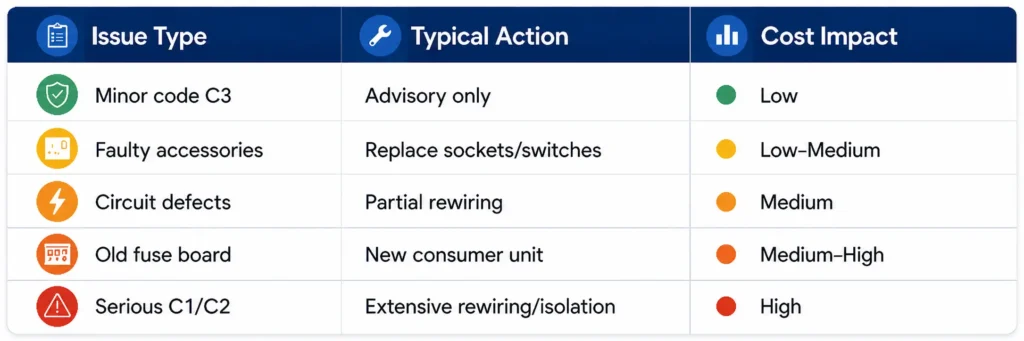
Illustrative, not fixed prices.
How to Get Competitive Quotes for EICRs
Finding a competitive quote for an EICR starts with comparing like‑for‑like services from qualified electricians rather than focusing on price alone. An individual who values independence will first confirm that each contractor is properly registered, insured, and experienced with the relevant property type. They request written quotes that clearly separate inspection, testing, and report production, plus any call‑out or travel charges.
To avoid being locked into inflated pricing, they gather at least three quotes, ideally from both local firms and independent electricians. Providing accurate details about circuit numbers, previous reports, and access constraints helps eliminate vague “from” prices. They then question unusually low quotes, checking what is excluded, and favour transparent time estimates, fixed fees, and clear terms for any follow‑up work.
Benefits of Investing in an EICR Certificate
Peace of mind is the most immediate benefit of investing in an EICR certificate, but the advantages extend far beyond reassurance. By confirming that a property’s wiring is safe and compliant, an EICR helps people live or operate businesses without constant worry about hidden electrical dangers or sudden failures.
An up‑to‑date EICR also gives owners leverage and flexibility. It strengthens insurance claims, supports legal compliance, and reduces the risk of costly disputes or enforcement action. For landlords, it protects income by making properties more attractive to safety‑conscious tenants. For homeowners, it can streamline sales and valuations. Above all, identifying faults early prevents disruptive breakdowns and potential fires, preserving the freedom to use a property’s electrical system confidently and without compromise.
Frequently Asked Questions
How Often Should an EICR Be Renewed for Different Property Types?
An EICR is typically renewed every 10 years for owner‑occupied homes, 5 years for rentals or at tenancy change, 3 years for HMOs, and more frequently for commercial or industrial premises, depending on usage and risk.
Who Is Legally Responsible for Arranging an EICR in Shared Ownership Properties?
In shared‑ownership homes, legal responsibility usually sits with the landlord or housing association for communal and landlord‑owned areas, while the lease or shared‑ownership agreement may place additional EICR duties on the individual leaseholder’s demised premises.
Can I Stay in My Home While the EICR Inspection Is Carried Out?
Yes, the resident can usually stay in their home during an EICR. They retain full freedom of movement, though the electrician may briefly switch off power and will need clear access to sockets, consumer unit, and wiring.
What Qualifications Should I Check for When Choosing an Electrician for an EICR?
They should verify the electrician is a qualified electrician with Level 3 electrical certification, holds current BS 7671 (18th Edition) competence, has EICR experience, carries public liability insurance, and belongs to NICEIC, NAPIT, or similar.
How Long Does a Typical EICR Inspection Take to Complete?
A typical EICR inspection usually takes 2–4 hours, depending on property size, circuit complexity, and access. Larger or older homes, or those with known issues, may stretch to most of a working day.
Conclusion
To sum up, understanding EICR certificate costs helps property owners budget realistically and avoid surprises. Prices vary with property size, type, location, and the extent of any remedial work required. By comparing qualified electricians, seeking clear itemised quotes, and viewing an EICR as a safety investment rather than a box-ticking exercise, owners and landlords can protect occupants, comply with legal obligations, and maintain the long-term value and reliability of their electrical installations.