
UK school gas safety inspections guarantee boilers, catering appliances, kilns and pipework are compliant and safe. Duty holders must use Gas Safe registered engineers, keep written records and integrate gas safety into risk assessments. Annual checks, plus inspections after major work or concerns, cover ventilation, flues, pressure tests and safety interlocks. Common defects include poor ventilation, corroded pipework and missing CO alarms. Understanding the full process, key checks and follow-up actions helps schools maintain a safe environment.
Key Takeaways
- Schools must comply with Gas Safety (Installation and Use) Regulations, appointing competent Gas Safe registered engineers and maintaining a clear gas safety policy and records.
- All gas appliances, associated flues, ventilation, and pipework must be installed, inspected, and maintained by Gas Safe engineers with appropriate safety interlocks and flame-failure devices.
- Formal gas safety checks are required at least every 12 months, with additional inspections after major work, room-use changes, or when gas issues are suspected.
- Common defects include inadequate ventilation, blocked flues, corroded or undersized pipework, missing isolation valves, and lack of carbon monoxide alarms in high-occupancy areas.
- Unsafe findings require immediate isolation of affected appliances, risk classification, prompt remedial work, retesting, and thorough documentation in the school’s gas safety file.
Table of Contents
Gas Safety Duties for Schools
Every school in the UK has clear legal duties to manage gas safety, guaranteeing that all gas appliances, pipework, and flues are safe, maintained, and fit for use. These duties sit with the “duty holder”, usually the governing body, academy trust, or local authority, and cannot be ignored or casually delegated. They exist to protect pupils, staff, and visitors while allowing everyday activities to continue without hidden risk.
Duty holders must guarantee compliance with the Gas Safety (Installation and Use) Regulations 1998 and wider health and safety law. This includes appointing competent Gas Safe registered engineers, keeping written records of checks, and acting quickly on any identified faults. They must also have a clear, up‑to‑date gas safety policy, integrate gas risks into their overall risk assessment, and empower staff to recognise warning signs, report concerns, and follow emergency procedures without hesitation or bureaucratic delay.
Which Gas Appliances Require Inspection?
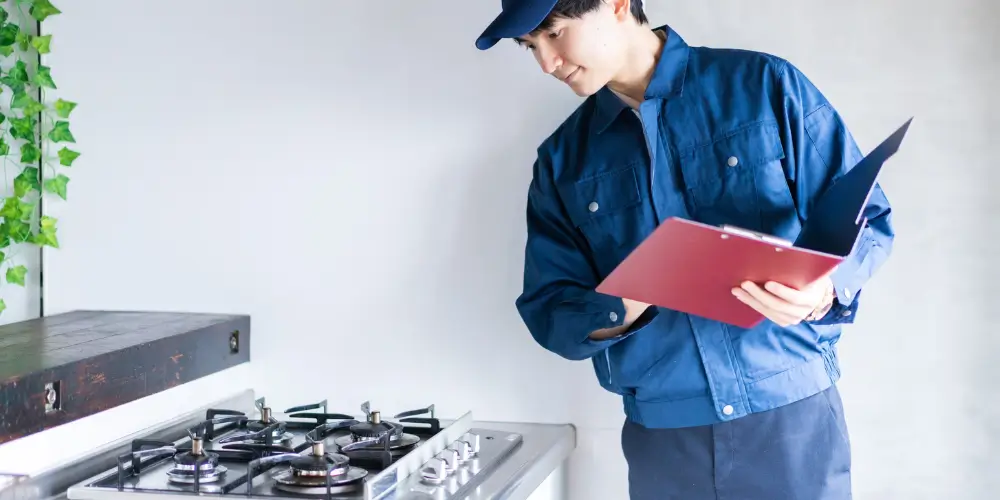
Not all gas appliances in a school are obvious, which makes clear identification essential before arranging inspections. Beyond the main boiler plant, any appliance burning natural gas or LPG and connected to the gas installation must be included. This typically covers central heating boilers, water heaters, warm air heaters, and modular plants serving classrooms, offices, and sports facilities.
Catering equipment is another major category: ovens, hobs, grills, deep-fat fryers, and combination ovens in main kitchens and food tech rooms all require inspection. In specialist areas, gas-fired Bunsen systems, ceramic kilns, laundry dryers, and heated cabinets may also be present.
Flueless or portable gas heaters, though sometimes overlooked, are subject to the same safety scrutiny where they are permitted. Finally, associated flues, ventilation systems, safety shut-off valves, and gas pipework interlocked with appliances form part of the inspection scope, as faults here can undermine even well-maintained equipment.
When Should Schools Arrange Gas Checks?
Precisely timing gas safety checks is critical for schools because legal duties, term dates, and equipment usage patterns rarely align by chance. Schools are legally required to guarantee annual gas safety checks, yet those who value operational freedom often plan them to maximise flexibility and minimise disruption. The most efficient approach is to schedule inspections just before high‑demand periods, confirming equipment is safe when students and staff rely on it most.
Key timing considerations include:
- Annual certification carried out on a rolling 12‑month cycle, not “once per calendar year”.
- Additional checks after major gas work, refurbishment, or changes to room use.
- Pre‑term inspections before winter, when heating and boilers face peak demand.
- Immediate checks if staff notice unusual smells, sounds, flame colours, or ventilation issues.
- More frequent inspections for older systems or high‑intensity use, such as busy catering blocks.
This timing strategy balances compliance, safety, and day‑to‑day autonomy.
Preparing for the Gas Safety Inspection
Before a gas engineer arrives on site, careful preparation allows a school to shorten downtime, avoid repeat visits, and surface issues early. Leadership can choose to treat the inspection as a box‑ticking exercise or as an opportunity to secure autonomy from sudden shutdowns and disruptive emergencies. Clear planning empowers staff to keep learning spaces open and predictable.
The school should assemble previous gas safety records, risk assessments, and maintenance logs, and guarantee they are accessible without delay. Access routes to plant rooms, meters, and isolation points must be opened, clearly signed, and free from stored furniture or teaching materials. Key holders, site managers, and senior staff should agree in advance who will accompany the engineer and authorise any immediate remedial actions within their powers and budget.
| Preparation Focus | Freedom Gained |
| Ordered documentation | Faster, less intrusive visit |
| Clear access | Reduced disruption |
| Staff briefings | Confident decisions |
| Defined authorisations | Fewer delays |
| Transparent communication | Trust across the school |
Checking Gas Appliances and Pipework
Once the inspection begins, attention turns to a systematic check of every gas appliance and the pipework that feeds it. The engineer moves through kitchens, science labs, technology rooms, and plant areas, confirming that each boiler, heater, cooker, and Bunsen outlet operates safely and efficiently. This stage protects staff and students while allowing schools to use their spaces without unnecessary restrictions or disruption.
Gas appliances are visually assessed for damage, corrosion, and signs of overheating. Burners and controls are tested so they ignite reliably and shut down correctly. Pipework is traced as far as reasonably practicable, checking for leaks, mechanical damage, poor support, and unapproved alterations. Pressure and tightness tests verify the integrity of the system from meter to appliance isolation valves.
Key elements typically covered include:
- Condition of appliances and casings
- Stability and correct installation
- Operation of safety devices
- Soundness of pipework and joints
- Compliance with UK gas safety standards
Inspecting Flues and Ventilation
Attention then shifts to the often‑overlooked flues and ventilation that allow combustion gases to leave the building and fresh air to enter safely. During UK school gas safety inspections, engineers examine whether every boiler, heater, and water heater is connected to a correctly routed and continuous flue, free from corrosion, damage, or unauthorised alteration. Visible sections are checked for secure joints, adequate support, and clear terminations that discharge safely away from windows, playgrounds, and air intakes.
Ventilation is then assessed to guarantee combustion has enough air and that occupants are never trapped with stale or contaminated atmospheres. Inspectors verify that grilles, vents, and air bricks are unobstructed, appropriately sized, and not blocked by furniture, security bars, or improvised coverings. Mechanical ventilation, where fitted, is checked for correct operation and interlocks. The goal is simple: reliable removal of fumes and a steady supply of clean air, protecting health and space to learn.
Assessing Gas Appliance Safety
With safe flues and adequate ventilation confirmed, inspectors turn to the gas appliances themselves to determine whether they operate safely under real conditions. Each appliance is viewed as a potential point of failure that must not limit the school community’s freedom to use spaces confidently. Engineers verify that every unit is correctly installed, supplied with the right gas pressure, and capable of burning fuel cleanly without unstable flames or leaks.
They also check that safety interlocks and emergency shut‑off devices work instantly, so staff can regain control if anything behaves unpredictably. Any sign of damage, corrosion, or makeshift repair is treated as a direct challenge to safety and is flagged for immediate action.
- Visual condition and integrity of casings and fixings
- Flame stability, combustion quality, and burner performance
- Gas soundness tests at appliance connections
- Function of thermostats and safety cut‑outs
- Clear user instructions and accessible isolation points
Gas Safety in School Kitchens
Heat and haste define school kitchens, making gas safety measures especially critical where staff and pupils move in close proximity to live cooking equipment. Freedom of movement in these spaces depends on clearly marked, unobstructed escape routes, visible emergency gas shut-off controls, and robust ventilation that prevents heat and combustion products from building up.
Gas-fired ovens, hobs, bratt pans, and grills must be installed and maintained by Gas Safe registered engineers competent in catering work. Flame failure devices, interlocks between ventilation and gas supply, and correct combustion settings reduce the risk of leaks and carbon monoxide.
Routine pre-service checks by catering staff, confirming pilot lights, listening for unusual sounds, and checking for gas odours, support formal inspections. Staff training should emphasise quick isolation of gas, safe evacuation procedures, and strict control of portable gas appliances. Clear, practical procedures allow kitchens to operate efficiently without compromising safety or restricting everyday use.
Gas Safety in Boiler and Plant Rooms
Beyond the visible activity of school kitchens, boiler and plant rooms house the largest and often least accessible gas appliances on site, demanding disciplined control measures. In these enclosed spaces, safety is about giving staff and students the freedom to use the building without anxiety, knowing that combustion, ventilation, and interlocks are functioning as designed. Inspections consequently verify that only competent persons access these rooms, that clear routes around boilers are preserved, and that emergency gas isolation is obvious, labelled, and testable.
Engineers focus on combustion quality, flue integrity, and automatic shutdown arrangements that prevent unsafe operation. They confirm ventilation grilles are unobstructed, doors open freely, and electrical controls are compatible with gas safety systems. Records of all inspections and tests allow leaders to make informed choices, plan upgrades, and avoid dependence on single points of failure.
- Access control
- Emergency isolation
- Ventilation performance
- Combustion and flues
- Documentation and records
Common Gas Safety Defects in Schools
Routine school gas inspections consistently uncover a familiar pattern of safety defects that, while often minor in isolation, can collectively raise risk to an unacceptable level. Inspectors frequently identify inadequate ventilation around appliances, blocked air vents, and poorly maintained flues that restrict free combustion and safe fume removal. Corroded or undersized pipework, missing labels, and unsupported runs are also common, undermining both safety and regulatory compliance.
In teaching areas and kitchens, worn flexible hoses, damaged isolation valves, and appliances without flame-failure devices regularly appear. Equally troubling are obsolete or absent carbon monoxide alarms in rooms where staff and pupils expect to work, eat, and gather without constraint.
To clarify the recurring issues, the following table summarises typical defects:
| Defect Type | Typical Location | Core Risk |
| Blocked vents | Classrooms, stores | Incomplete combustion, fumes |
| Damaged flues | Plant rooms, roofs | CO leakage |
| Corroded pipework | Service voids | Gas escape |
| Faulty shut-off valves | Kitchens, labs | Delayed isolation |
| Missing CO alarms | High-occupancy areas | Undetected exposure |
Actions After a Failed Gas Safety Check
When a school fails a gas safety check, the priority shifts immediately from compliance to controlled risk management. Immediate action generally begins with isolating unsafe appliances or pipework, shutting off gas supplies where necessary, and preventing access to affected spaces. Leadership must not treat this as a bureaucratic setback; it is a temporary restriction to protect the long‑term freedom of staff and pupils to learn, work, and move safely.
Specialist Gas Safe engineers usually classify issues as “immediately dangerous” or “at risk,” guiding how quickly systems must be taken offline and repaired. Senior leaders then decide how to maintain lessons, heating, or catering through temporary alternatives that keep disruption minimal yet safety absolute.
To keep responses purposeful rather than panicked:
- Clarify the engineer’s risk category and recommendations
- Isolate affected equipment without delay
- Arrange prompt remedial work and retesting
- Communicate transparent, need‑to‑know updates
- Review maintenance routines to prevent recurrence
School Gas Safety Records and Documentation
Effective responses to gas safety failures depend on accurate records, not memory or informal notes. In UK schools, documentation creates transparency that prevents safety from becoming dependent on any single person. Leaders who value autonomy recognise that clear records reduce uncertainty, bureaucracy, and last‑minute crises.
Schools should maintain an up‑to‑date gas safety file including: current Gas Safe certificates, asset registers of all gas appliances, commissioning reports, ventilation checks, flue inspection records, pressure test results, and evidence of remedial works. Dates, locations, serial numbers, engineer IDs, and clear risk ratings are essential.
Digital storage is increasingly favoured, provided records are backed up and quickly accessible during audits or emergencies. Clear retention schedules typically at least two years for gas safety records, longer for major works protect continuity when staff change roles. Well-kept documentation ultimately supports freedom of operation: it proves compliance, minimises disruption, and underpins confident, informed decisions.
Frequently Asked Questions
How Much Do School Gas Safety Inspections Typically Cost per Site?
They typically cost £200–£600 per school site, varying with size, number of appliances, region, and contract terms. Administrators often seek transparent, itemised quotes and flexible scheduling to avoid unnecessary restrictions on budgets, operations, and future choices.
Can Schools Use In-House Caretakers Instead of External Gas Engineers?
No. Schools cannot lawfully use in‑house caretakers unless they hold current Gas Safe registration for the specific appliances. Legal duty demands qualified, registered gas engineers perform inspections, safeguarding occupants’ safety, compliance, and freedom from enforcement action.
How Long Does a Standard School Gas Safety Inspection Usually Take?
A standard school gas safety inspection usually takes 2–4 hours. Duration depends on system size, number of appliances, access freedom, and existing records; complex or poorly maintained sites can stretch to most of the school day.
Are There Specific Gas Safety Training Requirements for School Staff?
Yes. Staff must receive basic gas-awareness instruction, emergency isolation and evacuation procedures, and reporting protocols, while only certified Gas Safe engineers may work on appliances; leadership must document training, refresh it regularly, and empower staff to challenge unsafe practices.
How Should Schools Communicate Gas Safety Issues to Parents and Governors?
Schools should communicate gas safety issues through rapid, transparent updates: concise emails, SMS alerts, website notices, and governor briefings, sharing risks, control measures, timelines for resolution, and independent verification to empower informed, accountable decision‑making by families and governors.
Conclusion
In conclusion, effective school gas safety inspections depend on clear legal compliance, regular inspections, and proactive maintenance of all gas appliances and systems. By preparing thoroughly for checks, addressing common defects promptly, and keeping accurate records, schools can minimise risks to pupils, staff and visitors. Robust procedures in boiler and plant rooms, combined with swift action after any failed inspection, help guarantee a consistently safe learning environment and demonstrate a strong commitment to statutory safety standards.