
An Electrical Installation Condition Report (EICR) is a formal inspection of a property’s fixed electrical wiring that checks safety, condition, and legal compliance. It assesses circuits, consumer units, protective devices, and visible accessories, identifying wear, defects, and hidden risks such as overloading or damaged insulation. In the UK, it is especially important for landlords and owners of rented or older homes. Understanding “What is an EICR?” and how EICRs work, what they cover, and when they are required can clarify the next steps.
Key Takeaways
- An EICR inspects a property’s fixed wiring for safety and UK regulation compliance.
- It checks consumer units, circuits, protective devices, and visible accessories for faults.
- Landlords need an EICR every five years or at tenancy change; homeowners roughly every ten.
- The assessment includes visual checks and electrical tests, with coded findings and recommendations.
- An up-to-date EICR reduces the risk of fire and electric shock and supports property sales and lettings.
Table of Contents
What an EICR Really Is and Why It Matters
The answer to the question “What is an EICR?” is simple. An Electrical Installation Condition Report (EICR) is an assessment of a property’s fixed wiring, designed to check whether the electrical installation is safe, compliant with current regulations, and fit for continued use. It examines circuits, consumer units, protective devices, earthing, and visible accessories, identifying wear, defects, and hidden risks that could limit how confidently occupants use their space.
An EICR matters because it reveals dangers long before they restrict daily life, such as overloaded circuits, damaged insulation, or outdated equipment that might spark fires or electric shocks.
Legal Requirements for Electrical Inspections in the UK
Legal obligations around electrical inspections in the UK depend on how a property is used, who occupies it, and where it is located. While owners are free to design and adapt their spaces, they must ensure their electrical systems are demonstrably safe. Core duties stem from the Electricity at Work Regulations, the Housing Act, and related Scottish and Welsh regulations, which all lean on BS 7671 (the Wiring Regulations) as the technical benchmark.
| Area of law/rule | What it demands in practice |
| Electricity at Work Regs | Safe systems where work takes place |
| Housing legislation | Electrically safe homes that do not risk occupants |
| Local licensing conditions | Evidence‑based safety for licensed properties |
| Building Regulations (Part P) | Properly designed, installed, and altered circuits |
Who Needs an EICR And When to Get an EICR
An Electrical Installation Condition Report is useful for anyone who owns, manages, buys or rents out a property. It checks the fixed electrical installation, including wiring, sockets, light fittings, consumer units, earthing and bonding, to confirm whether the system is safe for continued use.
Landlords usually need an EICR at least every five years, or sooner if the previous report gives an earlier review date. A valid report should also be available before a new tenant moves in. If the report is unsatisfactory, the landlord must arrange the required remedial work within the stated timescale.
Homeowners are not usually under the same legal duty as landlords, but an EICR is still recommended every ten years. It is also sensible when buying or selling a house, after major renovation work, or if the property has old wiring, frequent tripping, damaged sockets, burning smells or visible signs of overheating.
HMOs and older rental properties often need closer attention because they usually have higher electrical demand and more people using the installation. Shared kitchens, multiple bedrooms, extra appliances and older consumer units can increase the chance of faults if the system is not checked regularly.
An EICR is also worth arranging after flood damage, fire damage, DIY electrical work, a change of property use, or the installation of major equipment such as an EV charger, heat pump or new electric shower.
A current EICR helps property owners understand the real condition of the installation. It supports safer occupation, easier compliance, better planning for repairs and fewer unexpected electrical problems later.
Step-by-Step Process of an EICR Assessment
Understanding the sequence of an Electrical Installation Condition Report (EICR) helps owners know what to expect, how long it will take, and how to prepare.
1. Initial Discussion and Planning
The electrician begins by discussing the property’s age, any previous alterations, and known electrical issues. Power may be turned off in stages so that occupants can plan around short interruptions.
2. Visual Inspection
A thorough visual check is carried out on consumer units, earthing, bonding, accessible wiring, sockets, switches, and light fittings to spot any obvious faults or risks.
3. Electrical Testing
Live and dead tests are performed using calibrated instruments to measure continuity, insulation resistance, polarity, and the performance of protective devices.
4. Recording Observations
All findings, observations, and test results are carefully documented to create a complete record of the electrical system’s condition.
5. Power Restoration and Reporting
Power is restored, immediate safety concerns are explained, and a written report is issued. This allows homeowners or landlords to make informed decisions about any remedial work. Check out the details: Understanding What an EICR Involves and Why It’s Important.
Understanding Different EICR Codes and Ratings
Each EICR code indicates how urgently action is needed, helping owners and landlords stay compliant without unnecessary restrictions or expenses. The overall outcome will be either “Satisfactory” or “Unsatisfactory”, based on the highest‑risk code found.
Core EICR observation codes typically mean:
- C1 – Danger present: Immediate risk of electric shock or fire; urgent action required.
- C2 – Potentially dangerous: Significant defects that must be remedied as a priority.
- C3 – Improvement recommended: Not unsafe, but upgrading would enhance safety and resilience.
- FI – Further investigation: The inspector needs more information before making a judgment on safety.
Understanding these codes lets people plan repairs on their own terms while still meeting legal duties.
Typical Electrical Faults Found During EICRs
EICRs often reveal recurring patterns of electrical faults that arise from age, wear, poor artistry, or outdated standards. Common findings include damaged or overheating wiring, brittle insulation, and loose connections that can spark or fail under load.
Missing or faulty earthing and bonding regularly appear, limiting protection against electric shock. Inspectors frequently identify outdated consumer units lacking RCD protection, leaving occupants exposed when using sockets outdoors or in wet areas.
Improperly modified circuits, DIY extensions, and overloaded multi‑way adaptors also surface, showing where convenience has overtaken safety. Defective sockets, broken switches, and poorly terminated lighting points are typical, especially in older properties.
These faults restrict the safe use of a property; resolving them restores confidence and genuine electrical freedom.
Factors That Influence the Cost of an EICR
Several practical factors determine how much an Electrical Installation Condition Report (EICR) will cost for a particular property. The price is rarely a flat figure, because electricians must account for the work involved and the level of risk they take on.
Homeowners and landlords who understand the main cost drivers can compare quotes more confidently and avoid paying for unnecessary extras.
Key influences typically include:
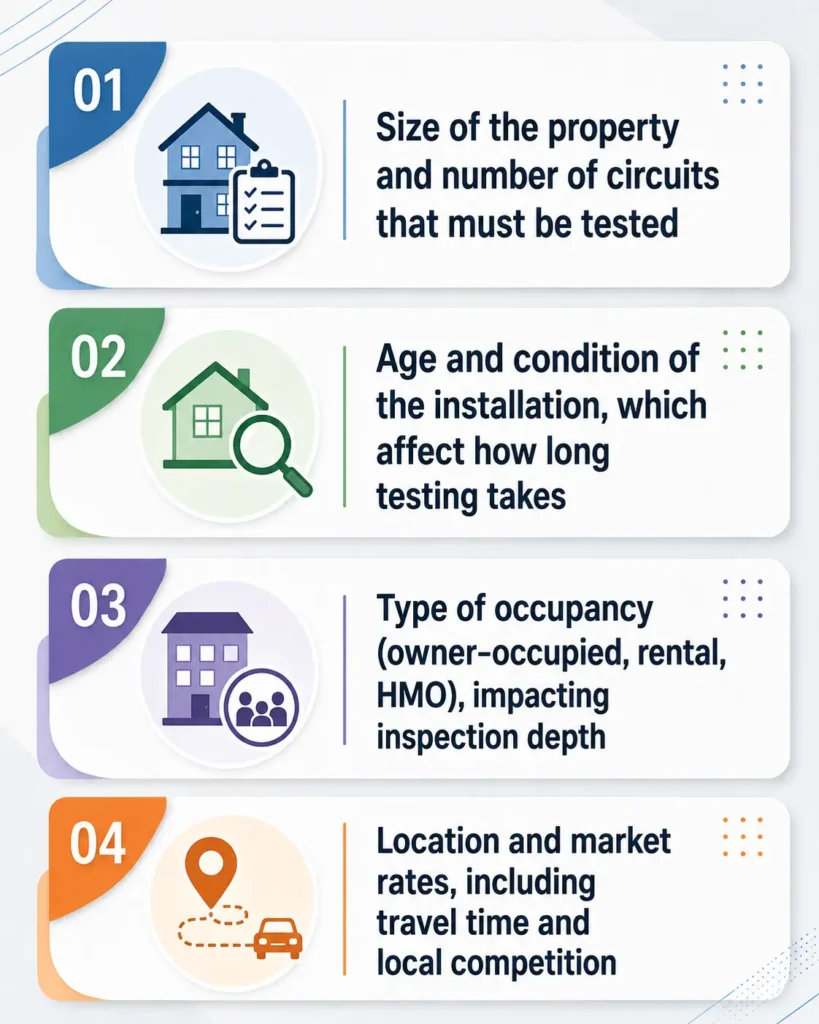
These elements shape the inspection time, complexity, and ultimately, the fee.
Long-Term Benefits of Regular EICR Checks
While cost is an important consideration, many owners and landlords weigh EICR fees more positively when the long‑term benefits are understood.
Regular inspections reduce the risk of electrical fires, shocks, and disruptive failures, helping people protect their homes, tenants, and lifestyle choices without constant anxiety about hidden faults. Over time, consistent EICR checks often work out cheaper than emergency call‑outs, insurance excesses, or major rewires triggered by neglected issues.
A clear, up‑to‑date electrical report can also support smoother property sales, refinancing, and letting, because it demonstrates responsible management. For landlords, a current EICR helps avoid fines, disputes, and void periods.
Ultimately, routine checks provide control: they turn the electrical system from a potential threat into a predictable, manageable asset. Here is the EICR Inspection Checklist: EICR Inspection Checklist for London Landlords Before the Electrician Arrives.
Frequently Asked Questions
Can I Be Present During the EICR Inspection, and What Should I Prepare?
Yes, the individual may stay throughout the EICR. They should ensure clear access to sockets, the consumer unit, and fixed appliances; provide previous reports or certificates; guarantee pets are controlled; and be ready to switch off the power briefly if needed.
How Do I Choose a Trustworthy Electrician or Company to Carry Out an EICR?
Check Part P registration, NICEIC or NAPIT membership, public liability insurance, and recent reviews. Request a written quote, sample report, clear timescales, and verification of who actually performs the inspection, not subcontractors.
Will an EICR Affect My Home Insurance Premiums or Policy Terms?
An EICR can influence insurance; some insurers offer smoother claims and occasional discounts, while others simply require a “satisfactory” report. If defects remain unresolved, cover might be limited, premiums increased, or claims challenged after an electrical-related incident.
What Should I Do if I Disagree With the Findings on My EICR Report?
Request for clarification and a written justification from the electrician, compare it with another qualified contractor’s inspection, gather photographic evidence, and, if still unconvinced, challenge the report formally through the firm’s complaints procedure or the relevant trade body.
How Should I Store and Share My EICR With Tenants, Agents, or Future Buyers?
Securely store the EICR as a digital PDF and a hard copy, back it up in an encrypted format, and freely share it via email or a cloud link with tenants, agents, or buyers, keeping a signed acknowledgement of receipt.
Conclusion
In conclusion, knowing “What is an EICR” offers homeowners and landlords clear insight into the safety and condition of their electrical installations. By understanding legal obligations, common fault codes, and the inspection process, property owners can address risks before they become serious hazards. Though it involves an upfront cost, regular EICR checks support compliance, protect occupants, and help avoid expensive emergency repairs, making them an essential part of responsible property maintenance in the UK.