
EICR certificate prices in London usually range from £70 to £200 per rental property, with most straightforward flats and houses costing around £70–£180. Prices vary by property size, number of circuits, condition of the installation, access, and how urgent the appointment is. Very cheap quotes can mean rushed inspections, hidden extras or missed faults, while transparent, VAT‑inclusive pricing helps landlords budget confidently. The information that follows explains these cost factors and options in more detail.
Key Takeaways
- Typical EICR certificate prices in London range from £70–£250 per property, with most standard rentals costing around £70–£180.
- Costs vary by property size and number of circuits, as larger homes and more circuits require longer, more complex inspections.
- Urgent, same-day or evening appointments, plus access difficulties, parking or congestion charges, can increase the overall EICR cost.
- Extremely cheap EICR quotes risk rushed, non-compliant inspections and hidden extras; ensure transparent, itemised pricing and confirm if VAT is included.
- Services like Landlord Safety Check offer fixed, VAT-inclusive rates by property size, online booking, and fast digital reports for reliable compliance.
Table of Contents
What Affects EICR Certificate Price in London?
While the basic purpose of an EICR is the same across the city, several practical factors drive how much an EICR certificate costs in London. Property size and the number of circuits usually have the greatest impact: more rooms, more sockets, and more consumer units mean more testing time.
The current condition of the installation matters too; older or altered wiring can demand deeper investigation. Access plays a role: cluttered rooms, limited parking, or restricted entry to flats can lengthen the visit.
Timing and urgency also influence price, with evening, weekend, or same‑day appointments often costing more. Finally, the contractor’s competence, insurance level, and membership of recognised schemes can slightly raise fees while reducing risk and hassle.
Average EICR Cost for London Landlords
For most London landlords, the average cost of an EICR typically falls between £70 and £200 per property, depending mainly on size and complexity. Within this range, many straightforward rentals sit around the £70–£180 mark when no major defects are present and access is simple.
Landlords aiming to keep control over expenditure often compare quotes from several registered electricians, checking exactly what is included in the stated price. Here you can find how to check if your electrician is suitable for EICR.
Some contractors bundle minor remedial work or provide digital certification and photos within the same fee, while others charge strictly for the inspection only. Transparent pricing, fixed written quotes, and clear timescales help landlords plan budgets confidently and minimise surprise add-ons, maintaining both legal compliance and financial flexibility.

EICR Prices by Property Size
Beyond the general averages landlords see across London, EICR prices vary most noticeably with property size and layout. Inspectors usually base quotes on the number of circuits, rooms, and consumer units, because these dictate how long testing and documentation will take. A compact studio with a single board can be completed quickly, while a sprawling multi‑storey property naturally commands more time and a higher fee.
Landlords seeking financial and practical freedom often compare quotes strictly by size bands. Smaller homes typically attract a tight fixed price, whereas larger properties may bring stepped pricing or a blended day rate. Complex layouts, extensions, and outbuildings can push a property into a higher cost bracket, even when the basic floor area appears modest.
Flat, House and HMO EICR Costs
Different property types in London attract noticeably different EICR costs, even when floor areas appear similar. A compact one‑bed flat might be quoted from a relatively low baseline, while a three‑storey townhouse or busy HMO usually sits higher on the pricing ladder. Inspectors factor in access, layout complexity, and how the installation has evolved over time.
Landlords comparing flats, single lets and HMOs can picture the contrast:
- A streamlined new‑build flat with a single consumer unit
- A Victorian terrace house with extensions and loft conversion
- A modern townhouse split over three levels
- A licensed HMO with locks on every bedroom door
- A large shared house with multiple kitchens and bathrooms
Each scenario shapes testing time, documentation, and ultimately, EICR cost.
Why Circuit Numbers Change the Price
Circuit count sits at the heart of EICR pricing because every individual circuit must be tested, recorded, and assessed against current regulations. Each circuit lighting, sockets, cookers, showers, EV chargers requires separate inspection, test readings, and documentation. More circuits mean more checks, more time on site, and a longer report, all of which directly raise the fee.
For landlords who value freedom from hassle and repeat visits, understanding circuit numbers lets them predict cost and avoid surprises. A compact one‑bed flat with 6–8 circuits usually costs less than a large HMO or townhouse with 20+ circuits and multiple consumer units. Responsible contractors consequently base quotes on circuit quantity, not just property type, to keep pricing transparent and aligned with actual workload.
How Property Access Can Affect Cost
Access to the property and its electrical installation can greatly influence the cost of an EICR in London. When entry is smooth and the board is easy to reach, electricians move quickly, keeping labour time – and price – under control. Barriers, delays, or cramped layouts slow inspection and testing, pushing costs upward.
Restricted access often appears as:
- Tight meter cupboards stuffed with storage, blocking the consumer unit
- Loft spaces without safe boarding or lighting
- Furniture fixed in front of sockets and fused spurs
- Commercial units where security must escort every movement
- Tenants unavailable, forcing rebooked visits or out‑of‑hours slots
Landlords who clear routes, arrange reliable keys, and provide flexible visit windows usually enjoy faster inspections and more predictable pricing.
Does the EICR Price Include the Report?
Often overlooked by customers, whether the quoted EICR price actually includes the written report depends on how the electrician structures their service. Some contractors bundle testing, inspection, and the formal certificate into one clear fee. Others separate the on‑site inspection cost from the written report, adding an extra charge to release the documentation landlords legally need.
For anyone who values flexibility and control over spending, it is essential to ask for a breakdown: “inspection only” versus “inspection plus report.” Clear itemisation prevents being locked into hidden add‑ons after the visit. A written quote should state that the final EICR document, with pass/fail outcome and coding of observations, is included in the advertised price before any work is booked.
Same Day EICR Certificate Costs
While standard EICR inspections in London are usually scheduled days in advance, same day EICR certificate services attract a noticeable premium. Electricians must reshuffle routes, work late, or divert from other jobs, and that flexibility is priced in. Landlords who want the freedom to move tenants in without delay often accept this uplift as the cost of speed.
Same day EICR prices in London typically sit at the upper end of the market range, especially for larger properties or complex wiring. Providers may apply a fixed fast‑track surcharge or a higher all‑inclusive urgent rate. For many, the benefit is clear:
- Keys changing hands today
- Contracts ready to sign
- Voids kept to a minimum
- Compliance boxes ticked instantly
- Plans proceeding without pause
Are There Extra Charges for Urgent Bookings?
Urgent EICR bookings in London usually do attract extra charges, but the way these fees are structured varies between providers. Some electricians apply a simple percentage uplift on the base EICR price, while others use fixed surcharges for same‑day or out‑of‑hours appointments. Landlords who value flexibility often accept these premiums to keep lettings moving and avoid void periods.
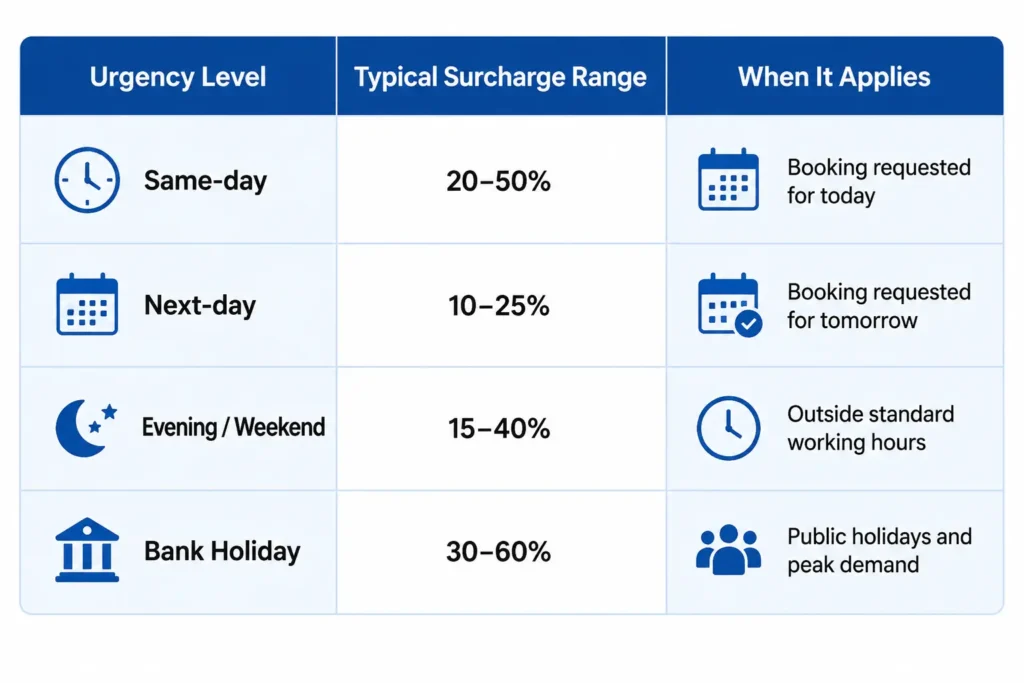
Transparent quotes help owners choose freely between speed and cost.
What Is Included in an EICR Quote?
Beyond how quickly an electrician can attend, landlords in London also need clarity on what they are actually paying for in an EICR quote. A clear quote lets them budget, plan works, and keep their letting strategy flexible rather than reactive.
Typically, a transparent EICR quote will spell out:
- Scope of testing: number of circuits, consumer units, and distribution boards covered
- Visual inspection of accessories, cabling, earthing, and bonding arrangements
- Functional testing of RCDs, breakers, and key safety devices
- Written EICR report with coding of observations (C1, C2, C3, FI) and overall outcome
- Access, parking, and time allowance, including any chargeable return visit for re‑inspection
When these elements are itemised, landlords can compare electricians accurately and stay in control of both safety and costs.
Cheap EICR Certificates and Hidden Risks
Although low‑priced EICR certificates can seem attractive to London landlords under pressure to minimise costs, they often conceal risks that are far more expensive in the long run. Cut‑price providers may rush inspections, skip testing circuits, or rely on outdated knowledge of the Wiring Regulations, leaving dangerous faults undocumented.
Landlords who want genuine freedom from anxiety, enforcement action, and disputes need more than a cheap PDF. They need a thorough, evidence‑based report produced by a competent, insured electrician who is willing to be accountable. Suspiciously low prices can also indicate vague scopes, extra “add‑on” charges, or a reluctance to share test results. In practice, a rock‑bottom EICR fee can buy uncertainty, not safety or regulatory peace of mind.
Unsatisfactory EICR and Remedial Costs
When an EICR comes back as “unsatisfactory”, the impact on the overall cost picture becomes very real for a London landlord, regardless of how much was saved on the initial inspection. An unsatisfactory report means the installation has defects that must be fixed before the landlord can confidently let the property without risking enforced downtime, fines, or insurance issues.
Remedial costs vary widely, from minor tweaks to major rewiring. EICR codes on the report (C1, C2, FI) represent work that constrains the landlord’s options until resolved. To visualise the stakes:
- Exposed live parts in a hallway light
- Crumbling rubber cables behind plaster
- Scorched socket fronts in a bedsit
- Overloaded consumer unit in a studio
- DIY junction boxes buried under floorboards

VAT and Callout Charges to Check
How clearly are EICR prices in London really presented once VAT and callout charges are stripped out? Many landlords discover the headline figure is only a starting point. Some firms quote ex‑VAT, others include it, and a few stay vague until booking, limiting a landlord’s ability to compare and choose freely.
| Cost Element | What to Check | Freedom‑Focused Tip |
| Base EICR price | Stated inc. or ex. VAT? | Demand written, VAT‑inclusive totals |
| VAT rate | Applied to all elements? | Confirm percentage before confirming |
| Callout fee | Charged per visit or per hour? | Ask if waived when booking remedials |
| Parking/congestion | Included or added later? | Insist on capped or fixed additions |
| Re‑inspection visit | Separate fee after remedials? | Negotiate bundled or reduced pricing |
Transparent pricing preserves choice and control.
How Landlord Safety Check Can Help
Landlord Safety Check addresses these pricing frustrations by offering fully itemised, VAT‑inclusive EICR quotes tailored to London properties. Their approach gives landlords cost certainty before anyone steps through the door, freeing them from surprise add-ons and vague “from” prices. Fixed rates by property size and clear remedial pricing let investors budget, compare, and move fast.
They streamline access to certificates with online booking, flexible evening slots, and digital reports delivered within tight timeframes, helping landlords keep voids short and portfolios compliant.
- Transparent quote screens without hidden fees
- Neat, punctual electricians respecting tenants’ time
- Clear photos of defects inside the final report
- Traffic‑free online booking from any device
- Swift remedial work to close compliance gaps
Frequently Asked Questions
How Often Do London Landlords Legally Need to Renew an EICR Certificate?
They must renew an EICR at least every five years, or sooner if the report specifies. Landlords also need a fresh EICR before new tenancies when required, ensuring tenants’ safety while keeping electrical compliance under their control.
Can Tenants Request a Copy of the EICR, and How Quickly?
Yes. Tenants can demand a copy of the EICR, and landlords must supply it within 28 days of the inspection, or within 28 days of the written request if the report already exists.
Is an EICR Required Before Selling a Residential Property in London?
An EICR is not legally required for selling a residential property in London, but buyers, surveyors, or lenders often expect one. It reassures everyone the electrics are safe, reducing haggling, delays, and last‑minute renegotiations.
What Happens if a Landlord Refuses to Obtain an EICR Certificate?
If a landlord refuses to obtain an EICR, they risk enforcement action, fines up to £30,000, possible rent repayment orders, difficulty serving valid eviction notices, and being compelled by local authorities to complete urgent electrical safety works.
Are There Insurance Implications for Landlords Without a Valid EICR?
Yes. Without a valid EICR, insurers may void cover, reject fire or electrical fault claims, or hike premiums. A landlord then shoulders repair costs, legal claims, and potential fines personally, sacrificing financial protection and flexibility.
Conclusion
In conclusion, EICR certificate prices in London depend on property size, circuit numbers, and the type of let, with HMOs often costing more. Landlords should be cautious of very cheap quotes that may hide extra fees or rushed inspections. Understanding likely remedial costs, VAT, and callout charges helps with budgeting and compliance. Landlord Safety Check offers clear pricing, experienced engineers, and support throughout the inspection and any follow‑up work, helping landlords stay safe and legally compliant.