
EICR inspection day preparation: On EICR inspection day, the electrician needs clear access to the consumer unit, meters, all rooms, sockets, and switches, including lofts and cupboards. The landlord should have previous EICRs, installation certificates,s and details of any known issues ready. The electrician will test circuits, check high‑risk areas such as kitchens and bathrooms, and then issue a report with C1, C2, C3, or FI codes that explain any risks, next steps, and what this means for ongoing property management.
Key Takeaways
- Ensure the electrician has clear access to the consumer unit, meters, all rooms, lofts, and under‑stairs areas before the inspection.
- Gather previous EICRs, installation certificates, minor works certificates, and records of upgrades or fixed equipment ready for review.
- Expect testing of all fixed wiring, including sockets, lighting, the main intake, outdoor supplies, and high‑risk areas such as kitchens and bathrooms.
- Understand that the report will list issues using C1, C2, C3, or FI codes to indicate urgency and the type of remedial action required.
- Plan to review the findings, schedule any remedial work promptly, and keep the updated EICR for compliance, insurers, and letting agents.
Table of Contents
How to Prepare the Property Before the Electrician Arrives
A well‑prepared property allows an electrician to carry out an EICR efficiently, safely, and with minimal disruption. Preparation starts with clear, obstacle‑free access to the consumer unit, meters, and all rooms. Landlords guarantee that doors are accessible, keys are located, and any security systems are disarmed, or their codes are ready, so that the electrician can move freely without delays.
Furniture and belongings are pulled back from sockets, switches, and visible wiring routes, giving space for testing and visual checks. Loft hatches, cupboards, and under‑stairs areas are cleared so the electrician can reach junctions and wiring runs without moving personal items. Finally, occupants and tenants are informed about likely power interruptions, allowing them to plan their own day without feeling constrained by the inspection.
It is equally important to know what an EICR involves and why it’s important.

Documents and Electrical Records to Keep Ready
Before an electrician arrives to carry out an EICR, having key documents and records ready greatly speeds up the inspection and improves its accuracy. A landlord who wants maximum freedom from future hassle benefits from a simple, organised file, digital or paper, that can be handed over in seconds.
They should keep previous EICR reports, installation certificates, and any Minor Works Certificates for alterations such as added sockets or lighting changes. Records of consumer unit upgrades, rewires, or EV charger installations are especially useful.
Manufacturers’ instructions and warranties for fixed equipment, like storage heaters, hard‑wired ovens, extract fans, and smoke or heat alarms, help the inspector understand how the system was intended to operate. Access to test reports for emergency lighting or fire alarm systems in HMOs or larger blocks is important where these exist. Finally, a clear list of circuits and any known issues or past faults saves time and supports a more accurate, future‑proof report.
Areas and Electrical Installations the Inspector Will Check
During an EICR, the inspector systematically works through all accessible parts of the fixed electrical installation, not just the consumer unit. They typically begin at the main intake position, checking the meter tails, main switch, earthing and bonding, and then move through distribution boards and sub‑boards that feed different parts of the property.
They will test and inspect all final circuits: socket outlets, lighting circuits, electric showers, cookers, immersion heaters, and fixed appliances. They also review hard‑wired smoke and heat alarms, extractor fans, and any outdoor supplies such as garages, sheds, and garden lighting, as long as they form part of the permanent installation.
Particular attention is paid to bathrooms, kitchens, and other higher‑risk areas where water, heat, or outdoor exposure could compromise safety. The inspector focuses on whether the installation as a whole can safely support tenants’ everyday freedom to plug in, live flexibly, and use power without hidden risk.
Why Clear Access to Sockets, Fuse Boxes, and Circuits
Clear, unobstructed access to sockets, fuse boxes, and circuits is essential for an efficient and accurate EICR. Inspectors must be able to reach every point they intend to test without moving tenants’ belongings or negotiating obstacles. When access is blocked by furniture, storage boxes, or locked cupboards, important tests can be delayed, limited, or even omitted, undermining the value of the report.
For landlords who want minimal restriction on how they use and let their property, clear access is a practical way to protect that freedom. It allows the inspector to properly verify disconnection times, earth continuity, and circuit integrity, reducing the risk of additional visits or enforcement action.
It also helps guarantee that hidden faults overheating connections, damaged cable insulation, or overloaded circuits are actually found. By arranging access in advance, landlords keep control of the process and gain reliable evidence that their installation is safe and compliant.
EICR Duration and How Disruptive It Is
Although every property is different, most landlords can expect an EICR to take anywhere from one to four hours, depending on the size, complexity, and condition of the installation. During this time, power may be switched off to parts of the property while circuits are tested, so planned downtime is essential if tenants work from home or rely on routers and chargers.
Landlords who value flexibility can minimise disruption by coordinating with the electrician in advance:
- Agree on on-time slots for any full-power shutdowns so tenants can plan calls, childcare, or work around them.
- Ask which rooms will be inspected first so occupants can move freely through the rest of the property.
- Confirm whether Wi‑Fi, heating, or cooking facilities will be off at any stage and for how long.
- Encourage tenants to use the inspection as a window to run errands, hit the gym, or work remotely elsewhere.
Common Electrical Problems Found on Inspection Day
Loose connections, ageing components, and DIY alterations are among the most frequent issues uncovered during an EICR. Inspectors often find loose terminations in sockets, light fittings, or consumer units, which can overheat and pose a risk to people and property.
Old fuse boxes lacking modern protection, brittle insulation on wiring, and outdated accessories also appear regularly, particularly in long‑let properties. Improper or unverified DIY work is another common problem. Added sockets, lights fed from incorrect circuits, and joints buried behind plaster or under floorboards restrict future changes and complicate safe maintenance.
Frequently, there is no earth connection at metal light fittings or switches, leaving exposed metalwork potentially live. Other regular findings include overloaded extension leads, damaged sockets, broken switches, missing blanking plates on consumer units, and deteriorated outdoor wiring. Each issue limits how freely a landlord can adapt or expand the installation without first putting things right.
What Happens After You Get the EICR Report?
Once the EICR has been issued and every observation has a C1, C2, C3, or FI code, the document effectively becomes a work plan rather than just a technical record. From this point, a landlord can make clear, time‑bound decisions instead of guessing what an electrician might want “someday.” Each code translates into a specific level of urgency, budget priority, and legal risk.
A practical way to view the report is as a simple freedom‑to‑act roadmap:
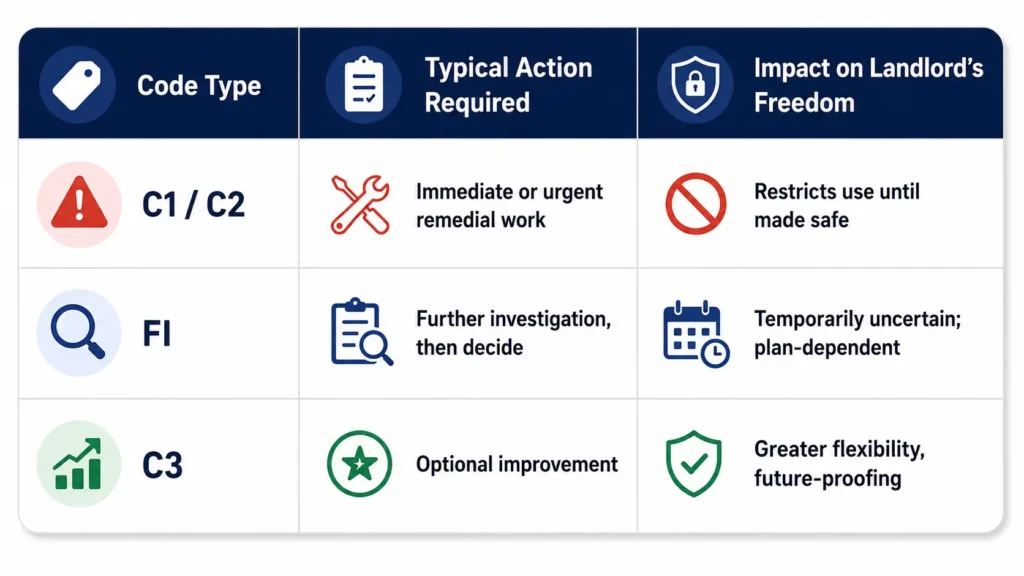
After reviewing the table with their electrician, a landlord typically schedules remedial work, stores the updated report, and uses the outcome to show compliance to agents, insurers, and local authorities, protecting both tenants and long‑term control over the property.
Frequently Asked Questions
Can Tenants Refuse Access for an EICR, and What Rights Do Landlords Have?
Tenants may initially withhold access, but cannot permanently block safety checks. Landlords must give reasonable notice, act respectfully, and seek negotiated entry; if entry is repeatedly refused, they may apply to the court to avoid harassment or unlawful entry.
How Often Must EICRS Be Renewed for Different Types of Rented Properties?
EICRs are usually renewed every 5 years for most private and social rentals, or at the change of tenancy if sooner. HMOs typically follow the same five‑year rule, unless local licensing demands shorter inspection cycles.
Who Is Legally Allowed to Carry Out an EICR, and How Do I Verify Them?
Only a qualified, competent electrician can legally carry out an EICR. The landlord checks that they’re registered with NICEIC, NAPIT, or a similar scheme, hold current insurance, qualifications, and calibration of test equipment, and provide written reports with their registration number.
Can I Pass EICR Costs to Tenants Through Rent or Service Charges?
Yes, but only if the tenancy agreement or lease clearly allows it and local law permits. Otherwise, EICR costs stay with the landlord. Tenants should scrutinise contracts and challenge unfair or hidden electrical safety charges.
What Penalties or Enforcement Actions Can Councils Take for EICR Non-Compliance?
Councils may issue improvement notices, impose civil penalties of up to £30,000, demand urgent remedial works, serve prohibition orders restricting use, and, in extreme cases, pursue prosecutions, thereby directly threatening landlords’ property freedoms if they ignore electrical safety duties.
Conclusion
On EICR inspection day preparation makes the process faster, safer, and less disruptive for everyone involved. When landlords clear access, have documentation ready, and understand what inspectors look for, potential hazards are more easily identified and resolved. Knowing the meaning of C1, C2, C3, and FI codes also helps them act promptly on recommendations. With the report in hand and remedial work completed, landlords can be confident their properties meet current electrical safety standards.