
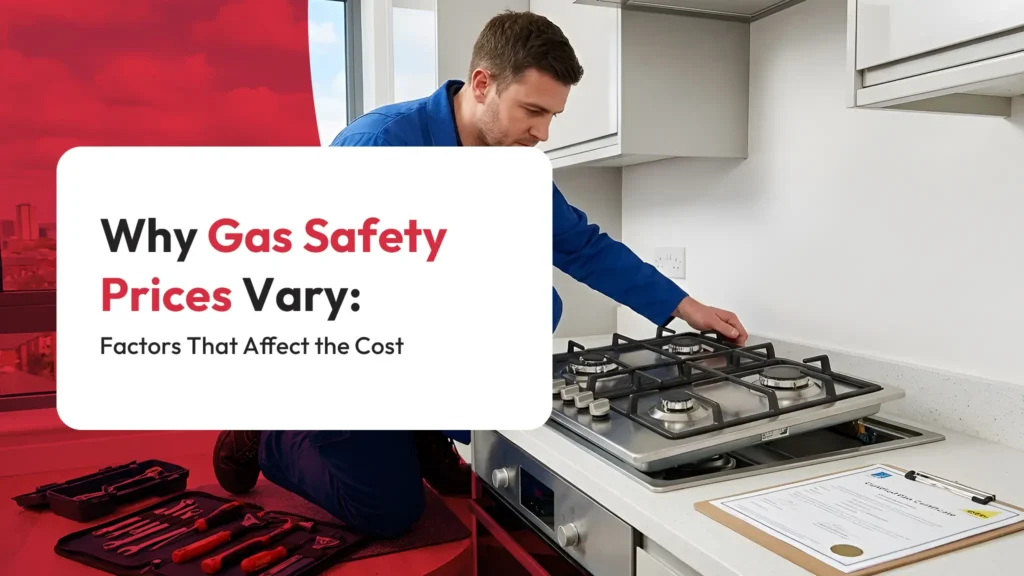
In this article we are discussing, “Why gas safety prices vary?” Gas safety prices in the UK vary due to several factors. Property type and legal requirements affect how detailed the check must be. Costs rise with the number and complexity of gas appliances. Poor access, awkward layouts, and multi-storey homes increase time on site. Location, travel, and urgency (same-day or out-of-hours) also influence price, as do any repairs needed after faults are found. A closer look explains how each factor shapes the final quote.
Key Takeaways
- Property type and use (owner-occupied, rented, HMO, short-let, commercial) change legal duties, documentation needs, and therefore the inspection price.
- The number and type of gas appliances affect cost, as each unit must be individually tested for safe operation and combustion performance.
- Access difficulty and property layout (boxed-in appliances, clutter, multi-storey layouts) increase time on site and overall inspection charges.
- Complexity of the system, including older, non-standard appliances or hidden flues and joints, can require extra investigation, specialist equipment, and bespoke fees.
- Location and urgency influence pricing through travel costs, regional rates, congestion, and premiums for same-day, evening, or emergency appointments.
Table of Contents
Property Type and Inspection Requirements
Although the Gas Safety (Installation and Use) Regulations 1998, are consistent nationwide, the type and use of a property considerably influence the scope and frequency of inspections. A conventional owner‑occupied home usually faces simpler checks, often limited to routine annual assessments. In contrast, rented properties fall under stricter landlord duties, requiring documented Gas Safety Records and punctual renewals to remain compliant.
HMOs and short‑let properties, including holiday rentals and serviced apartments, typically attract closer scrutiny. More transient occupants, higher turnover, and shared facilities increase perceived risk, which can prompt more detailed inspections and tighter paperwork standards.
Commercial premises; such as shops, studios, or small workshops, face requirements shaped by business activity and public access. Where customers or staff gather, engineers often must follow additional standards, method statements, and risk assessments. Across all property types, the greater the perceived exposure of others to potential harm, the more detailed the inspection, and the higher the likely inspection cost.
Number of Gas Appliances
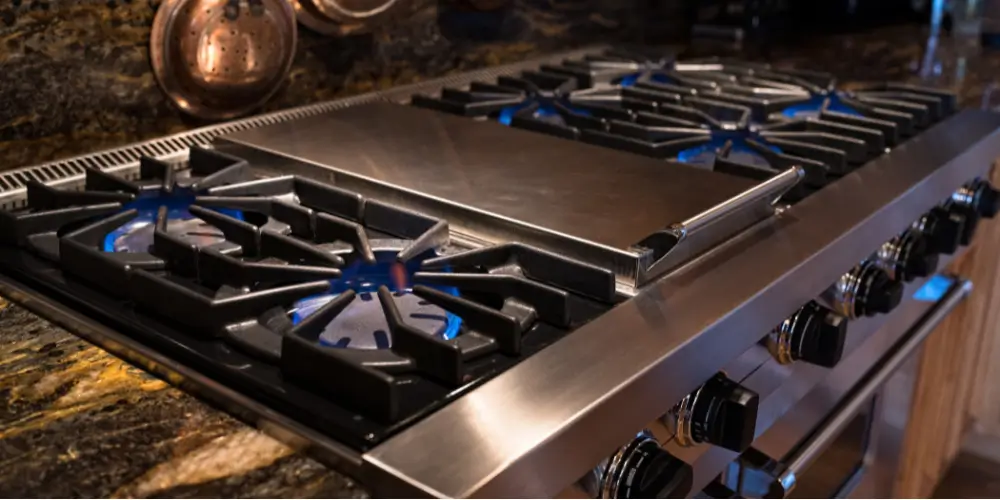
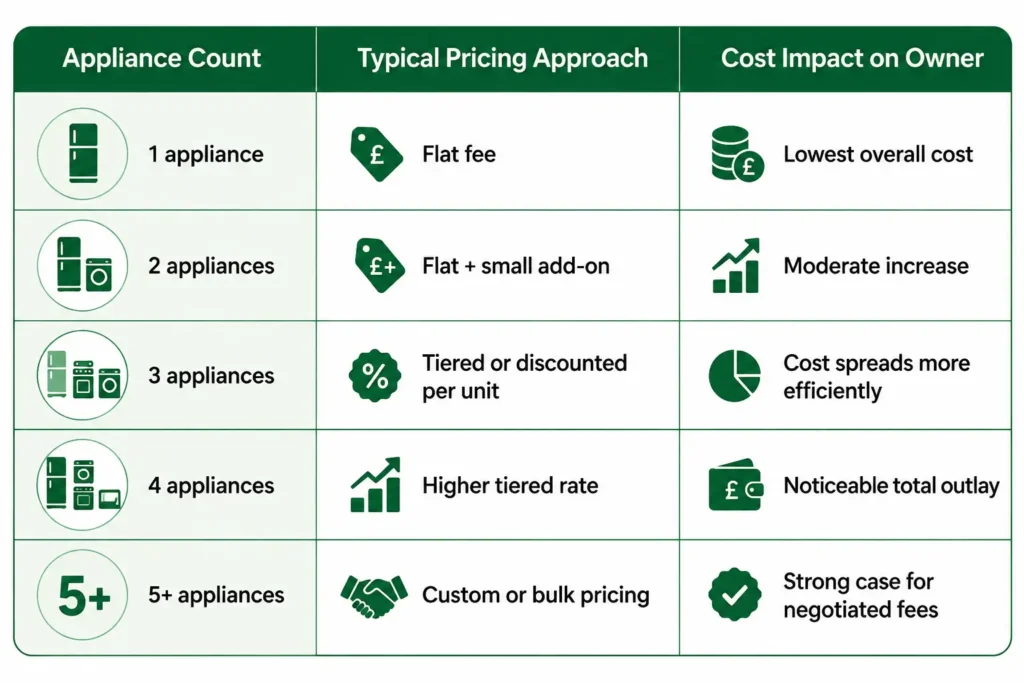
The number of gas appliances in a property is one of the most direct drivers of inspection cost, because each additional boiler, hob, fire, or heater requires time to test, inspect, and record. Each appliance must be checked for combustion performance, ventilation, flue integrity, and safe operation, so the engineer’s workload scales with appliance count, not just with the property itself.
Landlords and homeowners who value flexibility quickly notice that “per‑appliance” pricing structures can either protect or erode their budget, depending on how many gas points they choose to install.
Appliance Access and Property Layout
Because gas engineers must physically reach and work around every appliance, access and property layout greatly influence inspection time and price. When appliances are boxed in by fitted units, stored items, or tight alcoves, engineers spend longer clearing space and working in awkward positions. That extra time often appears as a higher call‑out or inspection fee.
Multi‑storey homes, split‑level flats, or properties with appliances spread between lofts, garages, and outbuildings also add to the cost. Every flight of stairs, locked door, or distant annex slows progress and reduces how many checks can be completed in one visit.
Conversely, clear routes, accessible meter cupboards, and appliances with good working space tend to keep prices lean. Landlords and homeowners who declutter areas around boilers, hobs, and fires before the visit usually enjoy quicker inspections, fewer delays, and a smoother path to maintaining legal compliance without sacrificing flexibility or control over their time.
Standard vs More Complex Inspections
Many gas safety checks fall into a straightforward, “standard” category, while others become more complex and costly due to added risk or technical difficulty. A standard inspection usually covers a small number of familiar appliances; such as a combi boiler, gas hob, and simple fire, installed to modern regulations with clear paperwork. The engineer can move through set test sequences quickly, keeping labour time and cost under control.
Complex inspections, by contrast, often involve older or unusual appliances, multiple heating zones, or systems that have been altered over time. Tracing non‑compliant work, hidden joints, or unclear flue routes demands extra investigation and specialised instruments. Where access is restricted or components are obsolete, the engineer may need to isolate parts of the system, return with additional equipment, or provide detailed written reports. Each added layer of uncertainty, testing, and documentation pushes the inspection away from standard pricing and towards bespoke fees.
Location and Travel Costs
Beyond system complexity, where a property sits in the UK also shapes gas safety pricing through location and travel costs. Engineers must factor in time, fuel, and access when quoting for a certificate. In dense urban areas, competition between engineers can keep headline prices lower, yet congestion, parking fees, and restricted access may still influence the final bill.
Rural and remote properties usually face higher costs. Longer travel distances, limited public transport, and sparse engineer coverage reduce flexibility and increase the minimum call‑out charge. Some engineers add a set mileage rate beyond a defined radius, or require multiple jobs in the same area before offering discounted prices.
Regional cost of living also matters. Areas with higher business rents, insurance, and wages tend to see higher baseline fees. Commercial Gas Safety Inspections Explained.
Understanding these location and travel pressures helps property owners compare quotes realistically and choose arrangements that fit their budget and lifestyle.
Urgency and Appointment Timing
When arranging a gas safety check, the urgency of the visit and preferred appointment time can greatly affect the price. Same‑day or next‑day callouts usually cost more because they disrupt an engineer’s planned schedule and may require overtime or reshuffling other jobs. This premium reflects the value of fast access and the pressure of fitting work in at short notice.
Appointment timing also matters. Evening or weekend slots tend to be priced higher than standard weekday hours, compensating engineers for working outside normal patterns and covering higher operating costs. Early‑morning “first call” visits may carry a surcharge, as they reduce an engineer’s flexibility for the rest of the day. Those who want to minimise cost often accept broader arrival windows or book further in advance. Others willingly pay extra for tight time slots, viewing the higher fee as a fair trade for control over their own schedule.
Additional Work After Safety Issues
Serious safety issues identified during a gas check can quickly turn a routine visit into a more expensive job. Once an engineer flags a dangerous appliance, unsafe pipework, or poor ventilation, they are legally and ethically obliged to make it safe, which often means extra work and extra cost. What began as a simple certificate visit can expand into repairs, part replacements, or even system upgrades.
Common follow‑on tasks include replacing corroded flues, repairing leaks, fitting new isolation valves, or upgrading regulators and pipe sizing. If appliances fail combustion tests, the engineer may need to service or adjust them before issuing a pass. In some cases, they must cap off an appliance entirely.
Costs rise through additional labour time, specialised materials, and sometimes repeat visits. While this can feel restrictive, dealing with issues immediately helps avoid enforcement action, long‑term damage, and the greater loss of freedom that comes with major failures or hazards.

Comparing Gas Safety Quotes Properly
Although many people focus on the bottom-line price, comparing gas safety quotes properly means looking closely at what is and is not included. A careful comparison allows the property owner to stay in control, choosing services that protect both safety and budget without being locked into unnecessary extras.
Key elements can be contrasted clearly:
| Aspect | Question to Ask | Why It Matters |
| Scope of checks | Which appliances and pipework are included? | Prevents gaps that risk non-compliance. |
| Time on site | How long is allocated for the inspection? | Rushed visits can miss developing faults. |
| Certification & access | Is digital/printed paperwork and re-issue included? | Guarantees proof of safety when needed. |
They should also examine engineer qualifications, response times, and any call-out charges hidden behind low headline fees. Transparent quotes, written in plain terms, give owners the freedom to compare like for like and select the option that genuinely matches their risk tolerance and responsibilities.
Understanding the Final Inspection Cost
Once quotes have been compared on a like‑for‑like basis, attention turns to what actually makes up the final inspection cost. At this stage, the price reflects more than just a quick visit; it represents the time, expertise and legal responsibility the engineer carries so the household can operate freely without safety worries.
Typically, three elements shape the final figure:
- Engineer time and call‑out – Travel, set‑up, full appliance checks, and any repeat testing needed to confirm safe operation.
- Compliance and certification – Producing the Gas Safety Record, documenting readings, and storing evidence so the occupier can prove compliance without hassle.
- Remedial work and re‑inspection – If issues are found, minor adjustments may be included, while larger faults or a return visit usually add extra cost.
Understanding these parts helps the customer decide whether the fee genuinely supports safe, unrestricted use of their gas appliances. For more details, visit our blog post How Much Does a Gas Safety Check Cost? What to Expect
Frequently Asked Questions
How Often Do Landlords Need to Renew Gas Safety Certificates in the UK?
Landlords in the UK must renew gas safety certificates every 12 months. This annual rhythm sets a clear limit on state interference while still proving appliances are safe, protecting occupants’ autonomy alongside their basic right to physical security.
Are There Legal Penalties for Missing a Gas Safety Check Deadline?
Yes, legal penalties exist: landlords can face unlimited fines, possible imprisonment, invalidated insurance, and enforcement action. Authorities may also issue improvement notices or prohibition orders, restricting property use until compliant gas safety checks are completed.
Does Home Insurance Require a Valid Gas Safety Certificate?
Home insurance in the UK doesn’t always require a gas safety certificate, but many landlords’ and some home policies effectively expect one. Insurers may refuse claims or void cover if gas appliances weren’t legally checked and safely maintained.
Can Tenants Request to See the Latest Gas Safety Certificate?
Yes, tenants can request and must be given sight of the latest gas safety certificate; legally, landlords must provide a copy within 28 days of inspection, and new tenants must receive it before moving into the property.
Who Is Responsible for Gas Safety Checks in Shared Accommodation (HMOS)?
In HMOs, the landlord or managing agent holds legal responsibility for gas safety checks. They must arrange annual checks by a Gas Safe engineer, maintain appliances, and provide up‑to‑date gas safety certificates to all occupiers.
Conclusion
To conclude “Why gas safety prices vary” It is due to several practical factors, from property type and appliance numbers to access, complexity, and location. Timing, urgency, and any remedial work required after issues are found also influence the overall bill. By comparing quotes on a like-for-like basis and understanding what is included, landlords and homeowners can make informed decisions, ensuring compliance and safety without overpaying for the essential gas safety inspection.