
Cheap EICR checks in the UK can seem attractive but often involve rushed inspections and skipped tests. Key risks include incomplete visual checks, missed signs of overheating or damage, and failure to properly test circuit continuity, insulation resistance, loop impedance or polarity. Consumer unit and RCD performance may not be fully verified, and reports can be vague or incomplete. Those wanting to understand what corners are commonly cut and how to avoid them will find clear guidance ahead.
Key Takeaways
- Essential circuit tests (continuity, insulation resistance, loop impedance, polarity) may be skipped, leaving dangerous faults undetected behind apparently working electrics.
- RCD operation and consumer unit safety checks can be rushed, missing slow tripping devices, overheating, damaged parts or unsafe DIY alterations.
- Incomplete inspection of accessories (sockets, switches, light fittings) may miss loose connections, overheating, exposed conductors and missing earthing or bonding.
- The EICR report may lack full test results, clear coding, and stated limitations, hiding the true extent and location of defects.
- Overloaded circuits, ageing boards and borderline defects may be downplayed or ignored, causing future breakdowns, failed sales and much higher remedial costs.
Table of Contents
Why Cheap EICR Checks Can Look Attractive to Landlords
Many landlords are naturally drawn to cheap EICR checks because they appear to minimise immediate costs while still ticking a legal compliance box. Fixed-fee offers, bold discount headlines, and “same-day certificates” create the sense that regulatory pressure can be handled quickly and with minimal disruption. For a landlord who values autonomy and cash flow, that promise is powerful.
They may also see low-cost checks as a way to keep control over rents. If compliance appears cheaper, they feel freer to resist raising prices or dipping into reserves. Online booking, minimal communication, and fast turnaround fit a lifestyle that dislikes friction and bureaucracy.
Marketing messages often frame the cheapest option as “no different from the expensive one,” suggesting any extra spend is wasteful. From a distance, every EICR looks like the same simple document, so paying less can seem like a rational path to retain both profit and flexibility.

Visual Inspection Areas That May Be Rushed
Low-cost EICR offers often achieve their price point by compressing the time spent on visual inspection, where numerous issues should be identified before any testing begins. When an inspector races through this stage, landlords may be left with an illusion of compliance while real hazards remain in plain sight. A thorough visual check is quick compared with full testing, yet it is where many obvious dangers first reveal themselves.
Key areas that may be skimmed include:
- Consumer unit covers not properly secured or showing signs of overheating
- Damaged accessories: cracked sockets, light switches, and spur units
- Exposed or makeshift wiring around boilers, cookers, and outdoor supplies
- Missing bonding or loose terminations at meters and main earth points
Where time is squeezed, the temptation is to glance rather than scrutinise. Those seeking genuine freedom from regulatory anxiety need inspectors who slow down long enough to actually look. Check out how the entire EICR inspection happens correctly.
Circuit Testing That Should Not Be Skipped
Circuit testing is where an Electrical Installation Condition Report (EICR) moves beyond appearances and proves whether a system is actually safe under fault conditions. This is the point at which cheap inspections often cut corners, quietly limiting the homeowner’s choices without saying so.
Continuity testing confirms that protective conductors form an unbroken path so fault currents can flow rapidly to earth instead of through a person. Insulation resistance tests expose damaged cables and moisture‑laden circuits that could be waiting to arc or overheat. Loop impedance testing checks whether fault currents will be high enough to trigger protective devices within safe disconnection times.
Polarity testing guarantees that switches interrupt the live conductor, not the neutral, preventing fittings from remaining live when apparently “off.” Functional circuit tests verify that each circuit behaves as designed under load. When these procedures are skipped or rushed, occupants lose the freedom to use their installation with informed confidence.
Consumer Unit and RCD Checks That Matter
A significant part of any EICR lies inside the consumer unit, where protective devices either work correctly or quietly fail in the background. When inspections are rushed or sold cheaply, the board often receives only a cursory glance: a quick lid-off, a photograph, and a few random RCD tests. That approach leaves the occupier exposed, limiting their ability to live freely in the property without nagging safety doubts.
A meaningful check examines whether the consumer unit is correctly rated, labelled, and free from overheating, loose terminations, or amateur alterations. RCD tests must confirm that devices trip rapidly enough, on every circuit they claim to protect, and that test buttons operate as designed.
An inspector focused on actual protection will verify:
- RCD trip times and test-button operation
- Correct circuit assignment and clear labelling
- Suitable main switch and overcurrent ratings
- Signs of damage, overheating, or unsafe modifications
Hidden Wiring Issues Cheap Checks May Miss
Beneath tidy accessories and freshly painted walls, concealed wiring often tells a very different story from what a bargain EICR suggests. Low‑cost inspections may rely heavily on quick visual checks and limited testing, leaving older or altered circuits largely unquestioned. Hidden junction boxes buried under floors, cables run diagonally in walls, and joints wrapped with tape instead of proper connectors can remain undetected.
Where access is tight or time is short, inspectors may skip lifting floorboards, opening selected fittings, or tracing circuits that do not immediately respond to basic tests. This can hide damaged insulation, rodent‑chewed cables, or overheating at high‑resistance connections.
For owners and landlords who value independence from future restrictions, these unseen weaknesses matter. A cheap certificate might look compliant on paper, yet leave wiring that fails under real loads, invites nuisance tripping, or in the worst case, turns a home into a fire risk.
Why Observation Codes Must Be Explained Clearly
Hidden defects in wiring are only half the problem; how they are reported on the EICR can be equally significant. Observation codes – C1, C2, C3, and FI – decide whether someone feels free to use a property confidently or stays trapped in uncertainty and fear. When cheap inspections reduce these codes to unexplained symbols, owners and tenants cannot judge risk, urgency, or cost.
Clear explanations turn technical labels into actionable insight. Each code should state what was found, why it matters, and what outcome it threatens. Without this, people cannot make informed choices about their own space. A concise note beside every code should clarify:
- the specific defect identified
- the level of danger in practical terms
- the consequence of ignoring it
- the recommended timescale for remedial work
Transparent coding lets individuals take control, prioritise work, and avoid being pressured into unnecessary or delayed interventions. Learn about EICR codes in detail.
The Risk of Incomplete EICR Reports
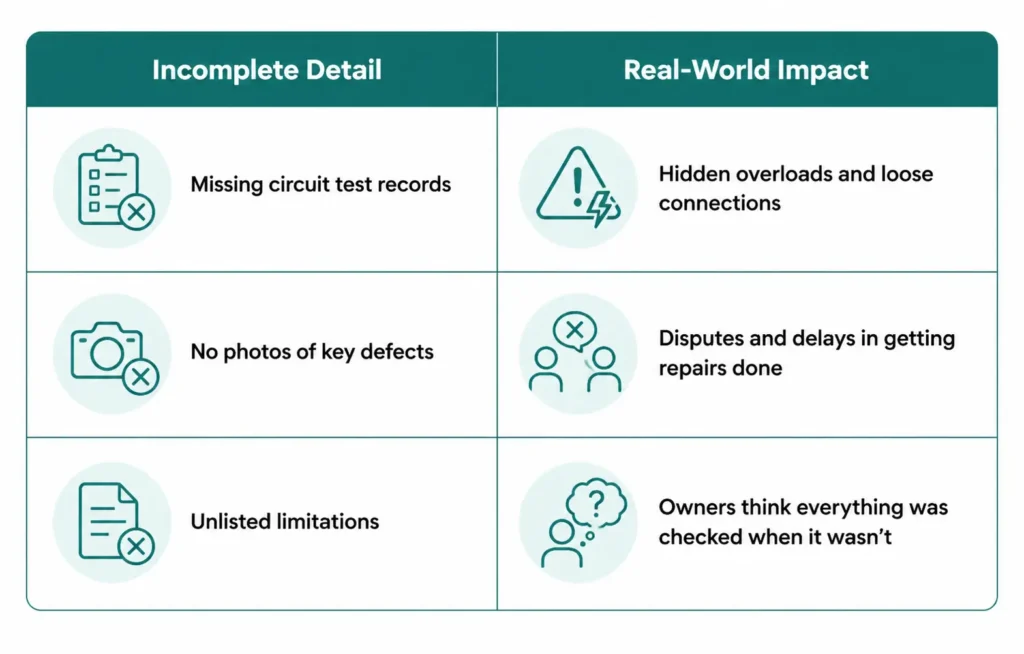
When an EICR report is incomplete, the gaps can be as dangerous as the faults themselves. Missing test results, skipped circuits, or vague comments leave owners in the dark about real electrical risks. Instead of enabling free use of a property, an unclear report quietly restricts it, because no one knows where it is actually safe to plug in, extend, or adapt.
Key dangers of incomplete EICRs include hidden fire risks, unseen shock hazards, and non‑compliance that can surface only after an incident or legal challenge. The supposed “all clear” becomes an illusion, not a basis for confident decisions.
Cheap EICR Checks vs Qualified Electrical Inspection
Many low‑priced “EICR checks” in the UK offer little more than a visual glance and a pre‑filled template, whereas a qualified electrical inspection is a structured, standards‑driven assessment of the entire installation. The difference affects not only compliance but the level of autonomy an owner truly has over their space. A cheap check may tick a box; a genuine inspection uncovers whether the system is actually safe to rely on.
A qualified inspection is typically carried out by a competent, accredited electrician who tests circuits under load, verifies protective devices, and records measurable data rather than guesses. The contrast usually appears in:
- Depth of testing and use of calibrated instruments
- Evidence‑based coding of defects against current regulations
- Clear, traceable documentation and test results
- Willingness to explain findings so the client can choose how to act
This distinction defines whether the report enables informed, independent decisions, or masks unknown risks.
How Low Cost EICRs Can Lead to Extra Repair Costs
Low‑cost EICRs often create a false sense of security that ultimately drives up repair bills. When inspections are rushed or priced unrealistically low, the electrician may skip detailed testing, overlook hidden faults, or under‑report borderline issues. Problems then remain in the background, quietly worsening until they demand urgent, expensive work that could have been tackled earlier and cheaper.
| Hidden Issue Missed in Cheap EICR | Likely Future Cost Impact |
| Overloaded circuits | Tripped breakers, damaged wiring |
| Ageing consumer unit | Full board replacement and rewiring |
| Loose terminations | Heat damage, fault‑finding labour |
Superficially “clear” reports can also embolden landlords or owners to delay proactive maintenance. When the truth surfacesvoften during a failure, rental void, or sale remedial quotations reflect years of neglect, not just a single fault. In this way, a bargain EICR can quietly erode financial freedom instead of protecting it.
How to Spot a Reliable EICR Provider in London
In contrast to bargain inspections that store up expensive problems for later, selecting a competent EICR provider in London starts with recognising clear markers of professionalism. A reliable firm is transparent, qualified, and willing to be scrutinised. They invite questions rather than rushing clients into a quick visit and a generic report.
Those who value freedom over their property and time can quickly filter providers by checking whether they:
- Publish fixed, itemised pricing and sample EICR reports.
- Hold current qualifications (such as Level 3 inspection and testing) and membership of recognised electrical bodies.
- Offer realistic inspection durations, not implausibly short “express” checks.
- Provide clear follow‑up support, explaining observations and options without pressure selling.
A trustworthy inspector documents test results, notes limitations honestly, and avoids vague language. This lets owners make independent, informed decisions instead of being steered by hidden agendas or surprise remedial quotes. How to check if your electrician is suitable for an EICR? Read our blog post.

How Landlord Safety Check Focuses on Proper Inspection Quality
Landlord Safety Check treats an EICR as a methodical safety investigation rather than a quick compliance formality. Each engineer works to uncover hidden faults that could quietly limit a landlord’s choices later fires, outages, or enforcement action that strip away control. Instead of racing through circuits, they test actual loading, earthing integrity, and protective device performance, documenting results in plain, actionable language.
Our approach rejects the “tick-box and leave” mentality common in cheap inspections. Circuits are traced, not guessed. Previous alterations are checked against current regulations, confirming whether a property is genuinely safe to let without future surprises.
Photographic evidence, circuit-by-circuit coding, and clear recommendations enable owners to make informed, independent decisions about remedial work rather than being pushed into unnecessary upgrades. By insisting on thorough inspection quality, Landlord Safety Check helps landlords maintain safe properties while protecting their freedom to manage costs, contractors, and long‑term strategy.
Frequently Asked Questions
How Often Should a Rental Property Have an EICR in the UK?
A UK rental property must have an EICR at least every five years or at each new tenancy. This schedule protects tenants’ autonomy, ensuring they live with safe, verified electrics rather than unseen, uncontrolled risks.
Who Is Legally Responsible for Arranging EICRS in HMOS?
In UK HMOs, the landlord or “person in control” is legally responsible for arranging EICRs. They must guarantee testing at least every five years, provide copies to tenants, and act quickly on any remedial recommendations.
What Qualifications Should an Electrician Have to Perform EICRS?
An electrician should be a qualified “competent person”: Level 3 electrical installation, 18th Edition (BS 7671), periodic inspection/testing certification (2391 or equivalent), valid insurance, and ideally registration with NICEIC, NAPIT, or similar schemes.
How Long Does a Thorough EICR Inspection Usually Take?
A thorough EICR usually takes 3–4 hours for a typical home, longer for larger or complex installations. The electrician methodically tests circuits, inspects accessibility, and documents defects, ensuring owners understand real risks before choosing their next steps.
Are EICR Certificates Required When Selling a Property, Not Just Letting It?
No, in England and Wales EICR certificates aren’t legally required for selling, only strongly recommended. However, in Scotland they’re effectively expected. Many buyers and solicitors now treat a recent EICR as essential leverage and peace‑of‑mind.
Conclusion
In conclusion, cheap EICR checks in the UK may seem appealing but often risk rushed inspections, missed faults, and higher long‑term costs for landlords. Proper testing of circuits, RCDs, consumer units, and hidden wiring is essential for both safety and legal compliance. By choosing a qualified, transparent provider such as Landlord Safety Check, landlords can guarantee a thorough, standards‑compliant inspection that protects tenants, properties, and their own financial interests.