
A tenant access checklist for EICR inspections helps landlords and agents arrange safe, lawful electrical checks with minimal disruption. It covers giving proper written notice, agreeing suitable appointment times, and clearly explaining the purpose of the inspection. It also sets expectations for tenant preparation, such as clearing access to sockets and consumer units. The checklist addresses what happens if access is refused and how to document attempts, leading into more detailed guidance on managing EICR access throughout a tenancy.
Key Takeaways
- Give tenants written notice with the legal basis, inspection window, who will attend, and expected duration, meeting or exceeding statutory notice periods.
- Offer flexible appointment slots (including evenings/weekends), confirm in writing, and treat tenant alternative times as genuine negotiation.
- Ensure clear access to all rooms, sockets, switches, light fittings, and especially consumer units; send tenants a simple pre-visit access checklist.
- Keep a detailed log of all access attempts, including dates, times, communications, tenant responses, and supporting evidence such as emails or photographs of notices.
- If tenants refuse access, calmly explain safety and legal duties, explore alternative times, document refusals, and escalate only where persistent non-cooperation continues.
Table of Contents
Why Tenant Access Matters for an EICR Inspection
Although it may seem like a simple practical detail, tenant access is central to the effectiveness and legality of an EICR inspection. Without meaningful access, an electrician cannot properly test circuits, assess hidden risks, or verify that protective devices actually safeguard people using the home.
Tenant access matters because an EICR is about more than box‑ticking; it is about ensuring that those living in the property can use electricity freely without facing hidden danger. Restricted access may leave old wiring, damaged sockets, or overloaded consumer units unchecked, undermining the report’s value and any sense of safety. Access also protects landlords and agents, providing clear evidence that they have taken reasonable steps to secure a safe, livable space.

Provide Proper Notice Before the Inspection
Because tenant access underpins a meaningful EICR, the process must start with clear, documented notice of the inspection. Landlords or agents should give written notice that explains the legal basis for the inspection, the intended date range, and the parts of the property that will be accessed. This transparency respects the tenant’s right to private enjoyment of their home while making clear why the check is necessary.
Notice periods must meet or exceed statutory requirements, but a rights‑focused approach goes further, giving tenants real time to prepare. The notice should outline who will attend, how long the visit is expected to last, and how the tenant can raise questions or concerns. Clear notice prevents surprise, protects autonomy, and supports genuine consent.
Agree a Suitable Appointment With the Tenant
Having given proper notice, the landlord or agent should then work with the tenant to agree an appointment that genuinely fits the tenant’s routine. This stage is about cooperation, not pressure. The tenant’s work pattern, childcare commitments, and need for quiet or privacy should guide the choice of date and time.
A range of appointment slots should be offered, including early mornings, evenings, or weekends where feasible, so the tenant does not feel forced to sacrifice income or personal plans. Clear confirmation of the agreed slot, in writing, protects both sides and reduces disputes. If the tenant proposes an alternative, it should be treated as a legitimate negotiation, not resistance, respecting the tenant’s right to enjoy their home without unnecessary disruption.
Explain the Purpose of the EICR Inspection
An EICR inspection should be introduced to the tenant as a straightforward safety check, not a fault‑finding exercise against them. It exists to confirm that the electrical system is safe to live with, so tenants can use their home freely without worrying about hidden risks.
The purpose can be framed clearly:
- Protect safety – identify dangerous wiring, overloaded circuits, and faulty accessories before they cause shock or fire.
- Preserve freedom of use – guarantee sockets, lighting, and fixed appliances are safe to use without restrictive warnings or constant concern.
- Meet legal duties – help the landlord comply with regulations, reducing the chance of enforcement action that could disrupt occupation.
- Plan sensible upgrades – highlight improvements that support modern, flexible living, such as safer consumer units or additional circuits.
It is essential for tenants Understanding What an EICR Involves and Why It’s Important.
Confirm Tenant Availability Before Booking
Ideally, tenant availability is checked before an EICR appointment is even proposed, so the inspection can be planned around real‑world routines rather than imposed on them. A landlord or agent who values tenant autonomy invites them to choose from several time windows rather than dictating a single slot.
Confirming availability means going beyond a single email. Effective practice uses at least two channels such as email and text, and asks tenants to state preferred days, times, and any blackout periods. This respects work shifts, caring duties, and quiet hours.
Where multiple tenants share a property, a single “lead contact” can coordinate internal agreement, ensuring that those most affected are present or have explicitly consented to access in their absence.
Prepare Tenants for Electrical Testing
Clear preparation for electrical testing begins with explaining what an EICR visit actually involves and how it will affect day‑to‑day living during the appointment. Tenants value independence, so clarity about what will happen lets them plan around the inspection instead of feeling disrupted or controlled.
To help tenants feel informed and in charge, landlords or agents can:
- Outline the purpose of the EICR, stressing that it protects the tenant’s safety and supports their long‑term freedom to live there securely.
- Explain which circuits may be switched off temporarily, so tenants can schedule work, cooking, or leisure accordingly.
- Give realistic timeframes for each stage of testing, not vague all‑day windows.
- Share what noise, tools, or minor disturbance to expect, avoiding surprises.
Ensure Access to All Rooms and Electrical Points
Because an EICR is a full safety check, inspectors must be able to reach every room and all relevant electrical points without obstruction. Tenants who value autonomy keep control by deciding in advance which areas need clearing, temporarily moving furniture, and ensuring doors are accessible at the agreed time.
Access should include bedrooms, living rooms, hallways, and any space containing sockets, switches, light fittings, or fixed appliances. Clear paths to these points prevent delays and reduce the need for repeat visits that disrupt daily life. Tenants remain free to secure personal items elsewhere, provided access routes stay open. Written reminders or checklists help everyone understand what must be reachable, supporting a swift, low‑stress inspection that respects privacy and time.
Check Access to Consumer Units and Electrical Areas
In addition to rooms and standard electrical points, access to the consumer unit (fuse box) and any dedicated electrical areas is required for a valid EICR. These spaces are the control centres of the installation; without clear access, the inspection cannot be fully completed or properly certified.
To keep the process smooth and interference‑free, tenants should guarantee that:
- The consumer unit is not blocked by furniture, storage, or locked doors.
- Any meter cupboards, riser cupboards, or plant rooms are open or keys are clearly available.
- Surrounding areas are clear enough for safe movement, ladder use, and panel removal.
- Labels, circuit schedules, and previous reports near the consumer unit remain visible and readable.
What Tenants Should Do Before the Electrician Arrives
Preparing briefly but methodically before an EICR visit helps avoid delays, repeat appointments, and unnecessary disruption. Tenants retain control of their space by choosing how to prepare, while still allowing the electrician to work efficiently. They can clear access to sockets, the consumer unit, and visible wiring runs, moving furniture just enough to create safe working routes without dismantling their home.
Tenants may wish to secure valuables, unplug sensitive electronics, and plan for short power interruptions so work does not clash with essential online activity or childcare routines. Any known issues tripping breakers, buzzing fittings, damaged outlets can be listed in advance.
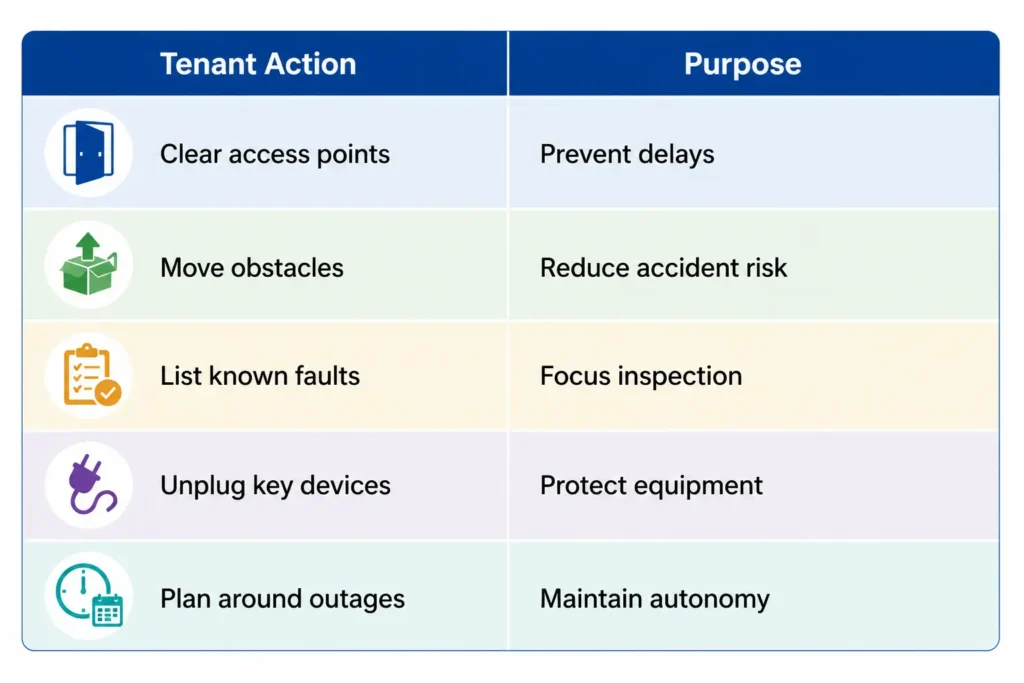
Learn major key points regarding EICR Inspection Day Preparation.
What Happens If the Tenant Refuses Access?
Refusing access for an EICR inspection places the tenant at the intersection of safety obligations and contractual rights. When a tenant declines entry, the inspection may be delayed, but the legal duty to guarantee electrical safety still rests with the landlord. The tenant’s right to quiet enjoyment does not erase statutory safety requirements, yet it does limit how and when access can be requested.
- The landlord must usually attempt to rearrange the visit at a mutually acceptable time.
- Persistent refusal can lead to warnings that the tenancy agreement is being breached.
- In more serious cases, landlords may seek an injunction compelling access.
- In extreme situations, ongoing refusal might contribute to grounds for possession, especially where safety risks are significant.

Keeping Records of EICR Access Attempts
Thorough documentation often determines how disputes about access are resolved, especially where a tenant has declined an EICR visit. Both landlord and tenant protect their freedom of choice and movement by keeping clear, objective records of every attempt to arrange inspection.
A precise log should note dates, times, communication methods, and any responses received. Copies of emails, text messages, and letters, along with delivery confirmations or read receipts, create a verifiable trail without surrendering anyone’s right to question or negotiate access. Where access is refused, written notes of the tenant’s stated reasons and any alternative dates suggested help show that both sides acted reasonably. Photographs of posted notices and screenshots of messages can further support an accurate, balanced account.
Avoiding EICR Delays During a Tenancy
Preventing EICR delays during a tenancy hinges on early planning, clear communication, and realistic scheduling. Delays often arise from missed appointments, unclear expectations, or clashing priorities between landlord, agent, and tenant. A focused, rights‑respecting approach keeps inspections efficient without disrupting daily life.
- Schedule early: Arrange EICR inspections well before legal deadlines, offering multiple date and time options so tenants can choose what fits their routine.
- Explain the visit: Provide a short, plain‑language outline of what the electrician will do, how long it takes, and which rooms they need.
- Confirm access in writing: Use email or messaging to confirm dates, access arrangements, and any key‑holding agreements.
- Plan for refusal: Have a clear process for rescheduling, documenting refusals, and exploring alternative times.
Landlords should understand that How Long Should You Allow for an EICR Inspection in a Rented Property?
Frequently Asked Questions
Can Tenants Request EICR Inspections at Shorter Intervals Than the Legal Minimum?
Yes, tenants can request EICR inspections more frequently than the legal minimum. The landlord isn’t legally forced to agree, but informed tenants may negotiate shorter intervals, citing safety, peace of mind, and shared responsibility for electrical integrity.
Who Pays for Remedial Electrical Work Identified During an EICR Inspection?
Typically the landlord pays for remedial electrical work identified during an EICR, because safety compliance is their legal duty; tenants should not be charged, though they may negotiate timing or access so repairs respect their autonomy.
Can Tenants Be Present Throughout the Entire EICR Inspection if They Choose?
Yes, tenants can usually remain present throughout an EICR inspection if they wish. Their presence can support transparency, protect personal interests, and allow real-time questions, provided they don’t obstruct the electrician’s work or compromise safety requirements.
How Are EICR Findings Shared With Tenants, and in What Format?
EICR findings are usually shared as a written report, often digitally as a PDF or email, sometimes printed on request. Tenants receive coded observations, recommended actions, and overall safety status, enabling informed choices about their living space. Here you can find detailed guidance on EICR Report Checklist: What Should Be Included in an EICR Report?
Does an Unsatisfactory EICR Affect a Tenant’s Right to Quiet Enjoyment of the Property?
An unsatisfactory EICR does not automatically remove a tenant’s right to quiet enjoyment, but serious unresolved hazards can justify access for urgent repairs, temporarily limiting privacy while reinforcing long‑term safety, security, and autonomy within the home.
Conclusion
A clear tenant access checklist helps landlords complete EICR inspections smoothly, legally and with minimal disruption. By giving proper notice, agreeing appointments, explaining the purpose and confirming availability, both parties understand expectations. Encouraging tenants to prepare their home and documenting all access attempts protects landlords if issues arise. Consistent communication and good record-keeping greatly reduce delays, helping guarantee the property remains electrically safe, compliant with regulations and well-maintained throughout the tenancy.