
What Happens if a Boiler Fails a Safety Check? If a boiler fails a safety check in London, it is classed as unsafe and no valid Gas Safety Record can be issued. The engineer will explain defects and may label it At Risk or Immediately Dangerous, often switching it off. The landlord must arrange prompt repairs or replacement and provide safe temporary heating and hot water. Proper documentation, retesting and communication with tenants are essential, and the next sections explain each step and legal duty in more detail.
Key Takeaways
- A failed boiler safety check means the installation is legally unsafe; no valid Gas Safety Record can be issued, risking non‑compliance with UK landlord regulations.
- The engineer will document specific faults and classify risk (NCS, At Risk, Immediately Dangerous or condemned), which dictates whether the boiler must be turned off.
- Landlords must arrange prompt repairs or replacement by a Gas Safe registered engineer, using written quotes and clear timescales to restore full compliance.
- Until repairs are completed and the boiler passes retesting, landlords should provide safe temporary heating and hot water solutions and keep tenants fully informed.
- After successful repairs, a new Gas Safety Record and supporting documentation should be kept for legal protection, insurance, and future maintenance planning.
Table of Contents
What Does a Failed Boiler Safety Check Mean?
A failed boiler safety check in London indicates that a gas appliance or its installation does not meet the safety standards set by UK gas regulations and the Gas Safe Register. It signals that the landlord’s current setup cannot legally be relied on to provide heat or hot water to tenants, because the risk profile is above what the law permits.
Failure means the engineer has identified one or more conditions serious enough to withhold a valid Gas Safety Record for that appliance. The boiler may be labelled “at risk” or “immediately dangerous”, and can be switched off or isolated. For landlords, this outcome restricts their ability to let or continue a tenancy without prompt remedial work. Tenants gain a clear right to demand correction before normal use resumes. In practice, the failed check marks a legal and practical threshold: no safe certificate, no lawful, risk‑controlled operation.
Common Boiler Safety Issues Found
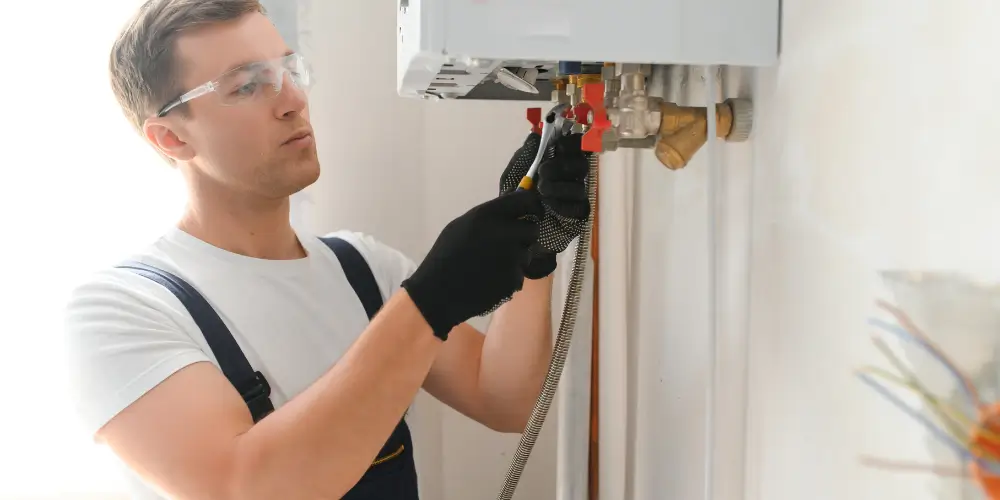
Failed boiler safety checks in London typically arise from a predictable set of faults rather than rare, obscure defects. Gas engineers most often flag inadequate combustion, evidenced by a yellow or unstable flame, soot deposits, or high carbon monoxide readings. Blocked or poorly routed flues are another frequent concern, limiting the boiler’s ability to discharge fumes safely.
Ventilation defects appear repeatedly, especially in tightly sealed rental properties where air inlets are painted over, boxed in, or otherwise restricted. Engineers also see unsafe gas pipework: corroded joints, undersized pipes, or poorly supported runs that threaten leaks and pressure drops.
Faulty safety devices are common, including inoperative pressure‑relief valves, stuck pumps, or disabled flame‑failure controls. Landlords also encounter non‑compliance with manufacturer clearances, boilers boxed into cramped cupboards or surrounded by clutter. Together, these issues undermine both legal compliance and a tenant’s basic freedom to live without hidden mechanical risk.
What Happens After a Failed Boiler Check?
Once a boiler fails its safety check, the gas engineer’s next steps are dictated by the level of risk identified. The landlord is usually given a clear written report describing defects, classification of risk, and actions required. This moment becomes a decision point: act fast, keep control of the timeline, and prevent disruption to tenants’ lives.
Typically, the engineer explains which components failed, what work is needed, and whether temporary measures can keep the property running within legal bounds. Landlords then choose between immediate repair, planned upgrade, or full replacement, weighing cost, convenience, and long‑term reliability. Throughout, accurate documentation protects both landlord and occupants.
- A marked-up report lying on a kitchen table
- A silent boiler in a quiet hallway
- Tools laid out, ready for urgent repairs
- An email thread confirming quotes and timescales
- A calendar blocked out for upgrade works
Will the Boiler Be Unsafe to Use?
Sometimes the most pressing question after a failed boiler safety check is whether the appliance can still be used at all. The answer depends on the specific fault and the risk category assigned by the Gas Safe engineer. Landlords who value autonomy need clear, factual guidance, not vague warnings.
A failed check does not always mean immediate danger, but any defect indicates the system is not meeting required safety standards. Engineers typically classify outcomes as follows:
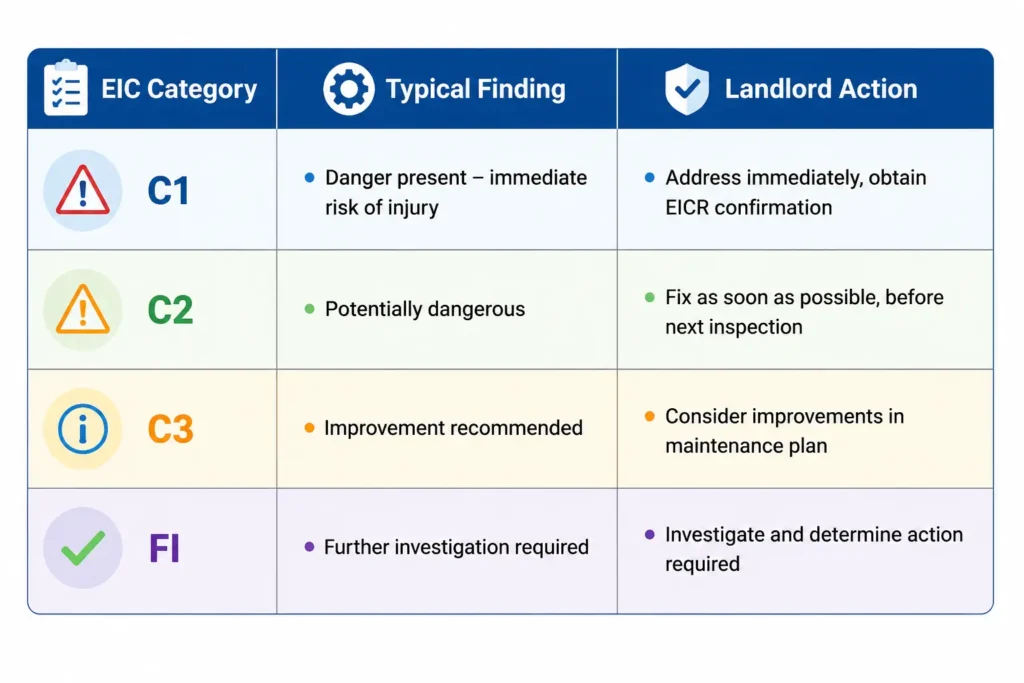
If the boiler is labelled At Risk, Immediately Dangerous, or condemned, it should be treated as unsafe to use, regardless of convenience or tenant pressure.
Actions Landlords Must Take After Failure
They should immediately review the safety record, identify whether the classification restricts use, and act in line with that advice. If the boiler is unsafe, shutting it down and isolating the gas supply becomes non‑negotiable, even if that feels inconvenient. Clear, written communication with occupants is essential, explaining what has happened and what will follow.
To visualise the key actions:
- A marked‑up safety certificate on the kitchen table
- A boiler switched off and isolation valve turned
- A notice on the boiler stating “Do Not Use”
- Tenants informed by email and message
- Records filed for future inspections
Arranging Repairs After a Failed Check
Securing appropriate repairs begins with understanding exactly why the boiler failed and which components or conditions must be corrected. A clear breakdown of defects from the Gas Safe engineer lets the landlord decide what is essential for safety and what is discretionary improvement. With that clarity, they can seek quotes without being locked into one contractor, provided every engineer is Gas Safe registered and competent with that boiler type.
Many landlords prefer itemised written quotes so costs, timescales, and any disruptive works are transparent. Asking for options, repair vs. targeted upgrade, helps preserve flexibility over long‑term running costs and future compliance.
Scheduling repairs quickly protects both legal position and tenant freedom to use the property without worry. Landlords often coordinate access windows that minimise intrusion while ensuring the engineer has enough time for testing and commissioning, including any follow‑up visit needed to confirm that all flagged issues have been fully resolved.
When a Boiler Safety Record Cannot Be Issued
Once repairs are agreed in principle, a separate question arises: what happens when the engineer is not willing to issue a Landlord Gas Safety Record at all. In this situation, the boiler is usually categorised as “Immediately Dangerous” or “At Risk”. The engineer has a professional and legal duty to withhold the certificate, even if that feels restrictive to the landlord.
Without a valid record, the boiler cannot lawfully be used as a rental appliance. Gas must be isolated or the appliance capped off, and the engineer will normally record the findings in writing. This refusal is not a negotiation tactic; it is a clear signal that the appliance falls outside acceptable risk.
Landlords still retain full freedom to choose how to proceed next, but not to ignore the classification:
- A silent boiler in a winter flat
- A red “Danger Do Not Use” label
- A capped gas pipe
- An anxious tenant beside cold radiators
- A landlord weighing urgent options
Providing a Safe Heating Solution for Tenants
Although a failed gas safety check can feel like an abrupt crisis, the immediate legal and practical duty on the landlord is clear: an alternative safe heating solution must be provided without delay. Tenants must be able to heat their home and water without being exposed to carbon monoxide, gas leaks, or electrical hazards.
Landlords typically turn to temporary electric heaters, upgraded electric panel heaters, or electric boilers, ensuring they are appropriately rated for the space, PAT-tested where applicable, and installed according to manufacturer guidance. Any temporary option must not overload existing circuits or block escape routes.
For hot water, immersion heaters, electric showers, or shared facilities may be deployed, provided they are safe, accessible, and fairly available to all affected tenants. Open communication is essential: tenants should be told what is happening, what’s being supplied, and how long interim measures are expected to last, preserving comfort and autonomy.
Completing Repairs and Retesting the Boiler
Turning a failed boiler safety check into a compliant system hinges on targeted repairs followed by a thorough retest by a Gas Safe registered engineer. Once defects are identified, landlords typically receive a clear breakdown of urgent hazards, advisory issues, and recommended upgrades. The engineer then isolates the boiler if necessary, orders parts, and schedules remedial work so tenants are not left without heat or hot water longer than needed.
Key stages of repairs and retesting might look like:
- Faulty seals and flues stripped out, replaced, and carefully refitted
- Corroded pipework cut away, renewed, and pressure-tested
- Burners cleaned, combustion adjusted, and settings finely tuned
- Safety devices thermostats, cut‑off switches, valves, individually verified
- Final retest with combustion analysis and documented readings
After this process, landlords hold a clearer line of sight: either the boiler passes its retest and can continue in service, or it is flagged for replacement. Check out Why Annual Gas Safety Checks Are Essential for Landlords and Homeowners?
Restoring Gas Safety Compliance
Restoring gas safety compliance goes beyond repairing faults and obtaining a pass on the boiler’s retest; it requires bringing the entire gas installation back in line with current legal and technical standards. For London landlords who value flexibility and minimal interference, full compliance is what keeps regulators, insurers and void periods at arm’s length.
A Gas Safe registered engineer should review every connected appliance, flue route and isolation valve, confirming that the system is not just safe today but robust against foreseeable misuse. Ventilation, combustion air and emergency controls must meet current standards, not historic ones.
Landlords then need evidence that stands up to scrutiny:
| Key Action | Freedom‑Focused Benefit |
| New Landlord Gas Safety Record | Legal proof that facilitates hassle‑free lets |
| Updated installation notes | Clear baseline for future quick decisions |
| Documented risk assessments | Demonstrates due diligence if challenged |
| Maintenance schedule | Prevents crises that restrict rental plans |
Once documented, compliance should be reviewed annually and after any gas work. Explore the Gas Safety Certificate Requirements: What Landlords Need to Know to give the tenants safety.
Frequently Asked Questions
How Much Does a Failed Boiler Safety Check Typically Cost Landlords in London?
It usually costs a London landlord from £80–£150 for re-inspection and minor fixes, but major faults, parts, or full replacement can push costs from a few hundred up to several thousand, depending on chosen contractors and specifications.
Can Tenants Refuse Access for Boiler Repairs After a Failed Safety Check?
Tenants can initially refuse access, but repeated, reasonable repair requests from landlords usually override continued refusal. Law may ultimately back the landlord’s right of entry, though peaceful negotiation and clear communication typically protect everyone’s safety and autonomy.
How Does a Failed Boiler Check Affect Landlord Insurance or Claims?
A failed boiler check can jeopardise landlord insurance, limiting cover or invalidating claims if defects aren’t promptly fixed. Insurers expect swift remedial action, documented certification, and honest disclosure; delaying repairs risks exclusions, higher excesses, or outright refusal of property damage claims.
Are There Grants or Subsidies to Help Landlords Replace Unsafe Boilers?
Yes. Landlords may access UK schemes like Boiler Upgrade Scheme, ECO4 and local authority grants, typically for efficient low‑carbon systems. Eligibility depends on property type, tenants’ incomes, EPC rating and compliance with evolving safety and environmental standards.
What Notice Should Landlords Give Tenants Before Further Boiler Inspections?
Landlords should usually give at least 24 hours’ written notice for non‑emergency boiler inspections, clearly stating time, purpose and access needed, while respecting tenants’ right to quiet enjoyment and negotiating alternative times if the proposal feels unreasonable.
Conclusion
In conclusion, “What Happens if a Boiler Fails a Safety Check?” A failed boiler safety check in London signals serious issues that landlords cannot ignore. It highlights immediate risks, legal responsibilities, and the need for swift professional intervention. By arranging prompt repairs, providing safe temporary heating, and ensuring a full retest, landlords protect both tenants and property. Restoring gas safety compliance is not just a legal requirement but an essential safeguard for health, safety, and long-term peace of mind for everyone involved.